

YouTuber explores anything and everything
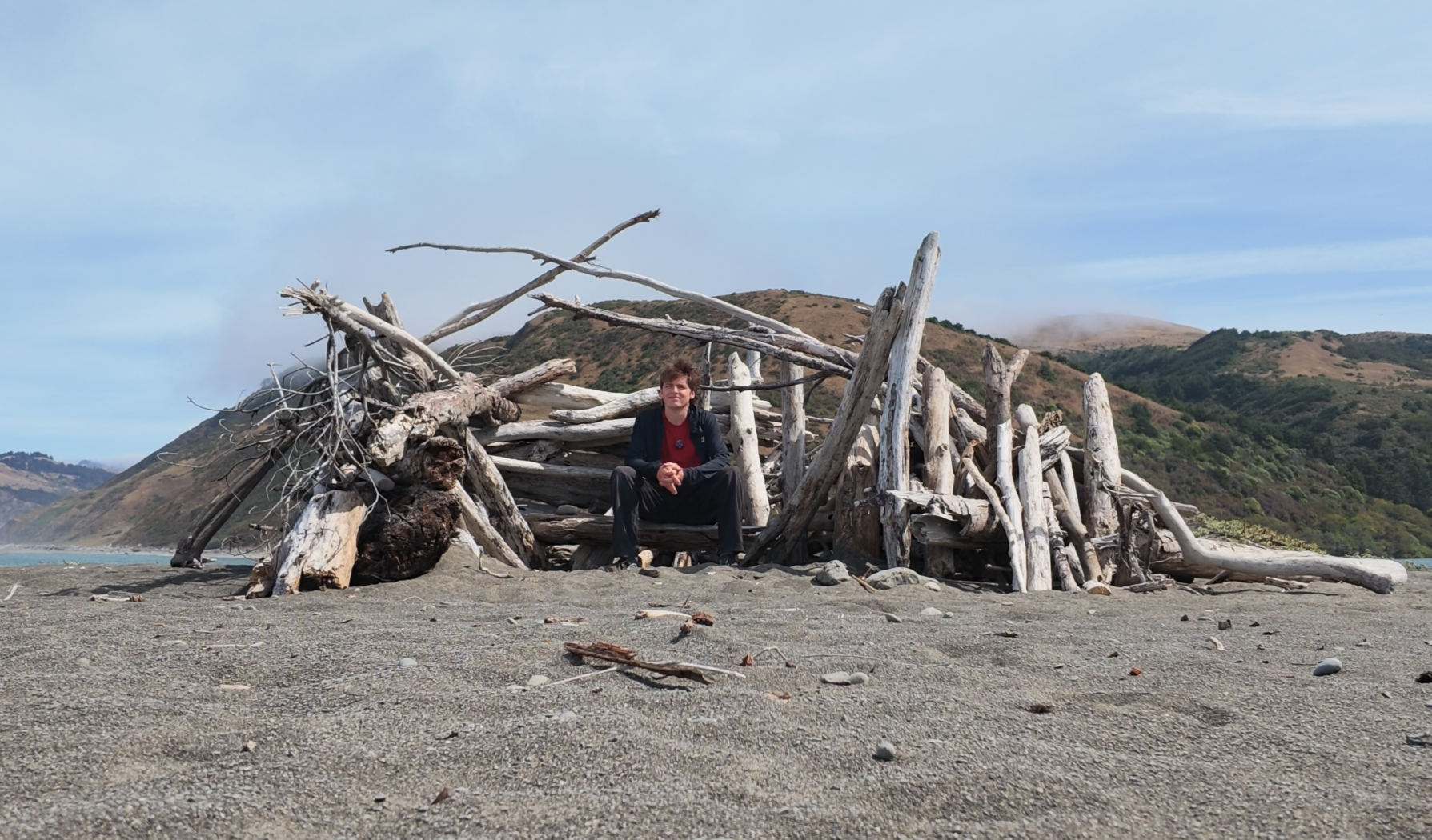
Dave sits along the California coast near the Punta Gorda Lighthouse. Photos submitted
By Tom Victoria
Dave explores anywhere and everywhere his camper will take him.
Up to now, the YouTuber has focused on a particular section of America.
"I usually stick to the Western states," he said. "I love Nevada and I'm based out of East Idaho. I'm 45 minutes away from Yellowstone. But I mainly stick to the more unknown stuff, stuff that's off the beaten path. I find that seems to get a lot of viewers' appeal, so a lot of Montana, Idaho and Nevada."
Dave, 25, explained how he selects his destinations, which included Alaska.
"Sometimes it's a risk because you don't really know what's gonna be there until you get to the spot," he said. "I've had a lot before that I had to scrap off, but basically I'll find a place. From my experience, the best places I've found are on Google Maps. I find some sort of old structure, and there's nothing else around. Nevada, for instance, around 70, 80 percent of the land is public land. You could just go out there and have a very high chance wherever you go is going to be open to the public. It's completely open and accessible to the public. Same with Idaho, huge swaths of public land. It's one of the great things about living in the West. From my experience, there's not much of a risk of losing because if one place isn't big, I could just transfer over to another place and add it to the same video. It's the same day and everything, make a little travel documentary."
Dave hasn't explored The Great White North yet.
"I've been through Canada before, but honestly, I don't like going through," he said. "It reminds me of California. There's a law for this, a law for that, regulation for this, regulation for that. You can't bring firearms into Canada. You can't bring bear spray. It's too much regulation in my opinion."
Dave doesn't necessarily plan out every detail ahead of time, such as ensuring he's on a peak to witness a sunrise.
"I play it by ear mostly," he said. "I got one thing that's often recurring is I run out of daylight. I always run out of daylight no matter what. Twelve, 15 hours of sunlight in the summertime still isn't enough. It takes a long time to film videos, so I usually end up camping out. It works out for the most part. I used to camp out in my Suzuki, which worked out pretty well, kind of rough camping. I never expected the YouTube channel to take off. I always just did it for fun."
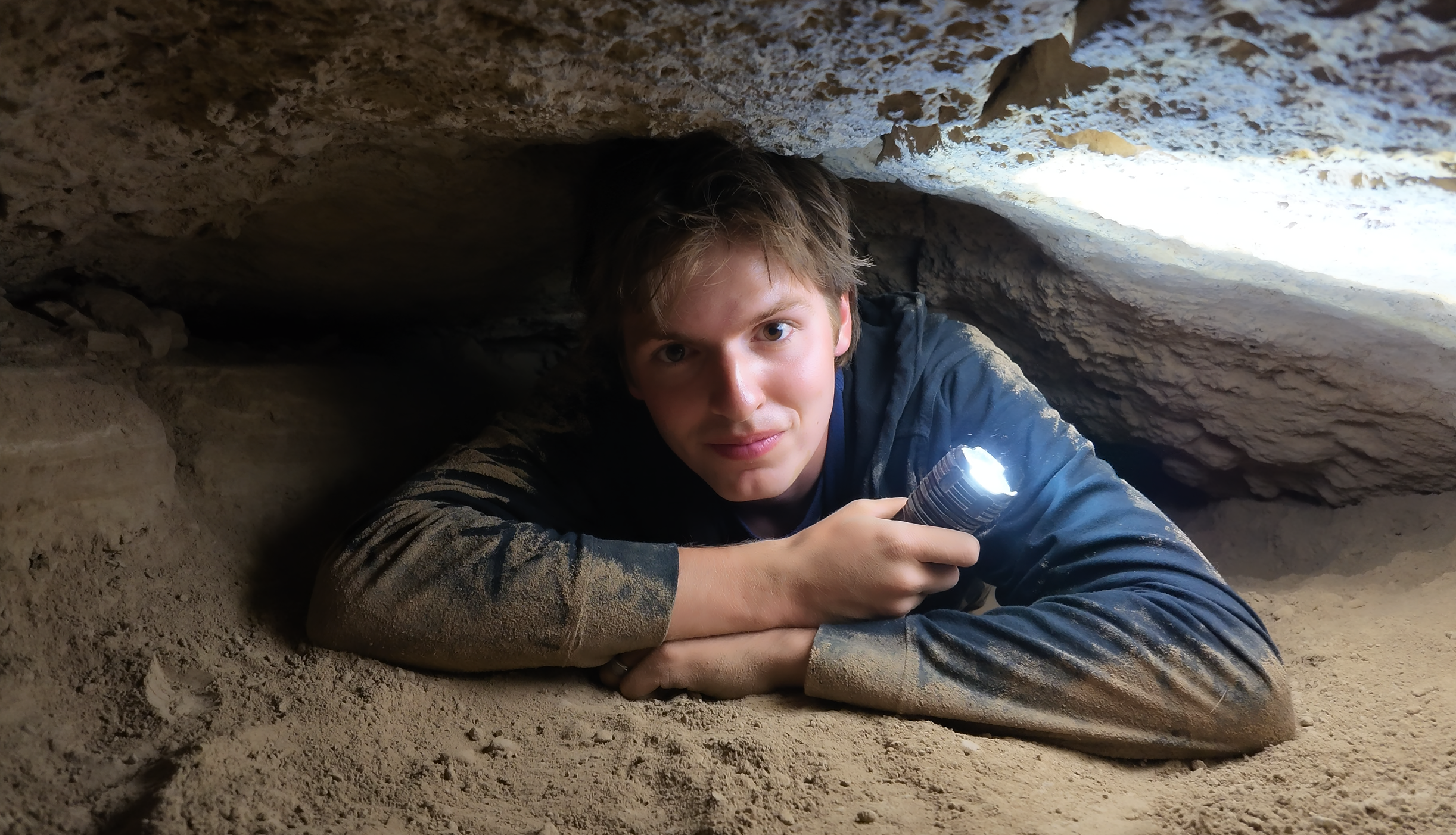
Dave explores Kuna Caves in Idaho.
Dave's fun resulted in revenue.
"I recently finished my bachelor's in Political Science," he said. "Once I finished that, average salary out of college, $50,000, $60,000, right around that. I'm making that on YouTube right now. I could jump off YouTube, work for someone else. I'm making the same amount right now. I view a lot of entertainment work is gig work. It's not really fully established, so I view it as just do it while it lasts. And while I'm doing YouTube, I could do my master's degree next. I camp out a lot of the time, which helps. Actually, I have a new truck here because of the channel. This Is a camper that pops up and has everything in it, stove and everything, the bed up top, fridge. As the channel continues, I gotta go out to further locations. I travel a lot. I have a camper now so that I could do that more luxury and be able to charge equipment and more creature comfort while I do it. Just a world of a difference having a full-size bed up top and having a fridge to store your food in. This is the first vehicle I've ever owned that was built in the 2000s. I've never had AC in a vehicle before."
Dave always enjoyed camping.
"I've done it all my life," he said. "I have a two-door Suzuki Sidekick. I modified the back. I put memory foam down. I built a bed platform. And I shoved the seats all the way forward and slept sideways for all my videos. I was okay with that because you're out in the mountains, you're camping. I'll take it."
Dave often has a canine companion, Lee, a black Lab mix, for his travels.
"Mr. Lee here, he goes on most of my adventures," he said. "People love him. Unless the place is real sketchy, then I won’t bring him. So abandoned mines, if I have to go down ladders and stuff, obviously he won't come with. Otherwise, he usually comes with me on these adventures. People worry about him sometimes. They ask questions like what if he gets hurt? And it's like, well, he's a dog, he's pretty smart. He hasn't been living in a basement. He knows what he's doing."
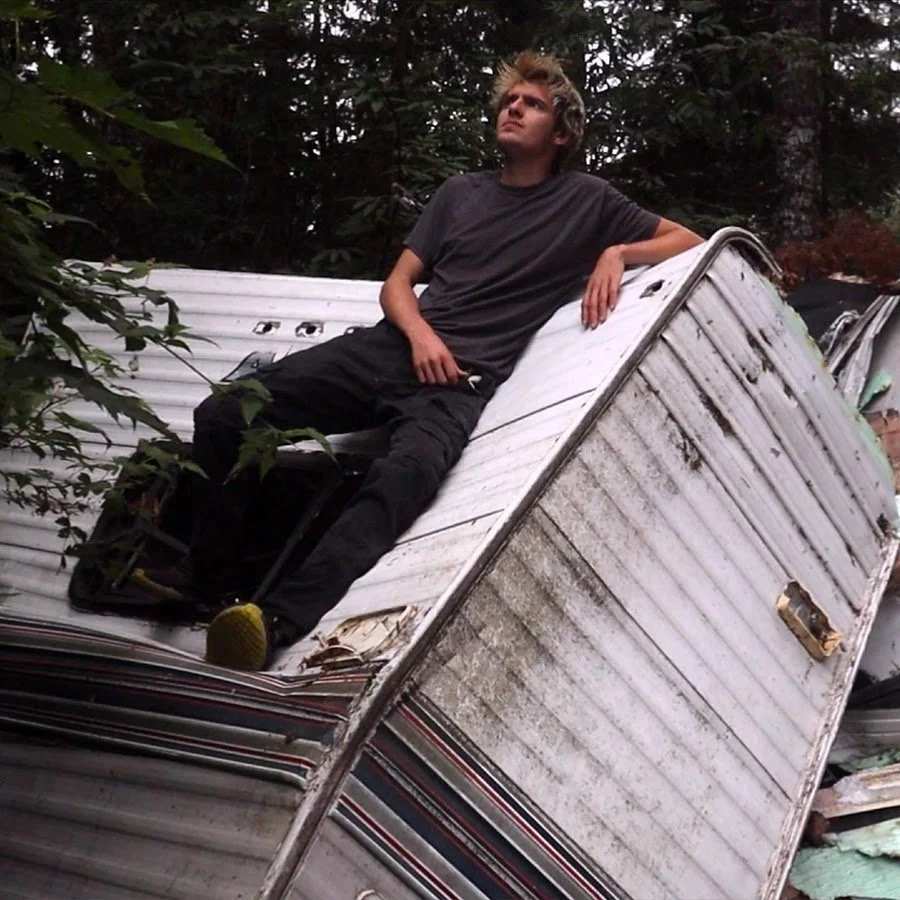
Dave lays on an abandoned trailer in Oregon.
Dave said folks tend to exaggerate the risks of staying out in nature.
"If death was common, it wouldn't make the news," he said. "Rattlesnake bites make the news. Grizzly attacks make the news. Someone dies in an abandoned mine, last time was a decade ago, that makes the news. What doesn't make the news is common deaths like old age, smoking, drinking. There's not as much you gotta worry about in nature as people tend to think. Not to downplay that you should just go out in the middle of nowhere, but you don't really need that much. Our ancestors did it for hundreds, thousands of years, so why can't we do it? It's really not as dangerous as people make it out to be."
Dave explained why Idaho is an ideal home base.
"It's great," he said. "It's cheap and laid back. I love that you could just leave five, 10 minutes out of town and you're going to have nothing. There's no light pollution or anything. You could look at the stars. A lot of places in the U.S., unfortunately, light pollution is becoming increasingly problematic as expansion continues. Idaho is one of the last areas where comparatively it's not developed. The biggest town in Idaho is Boise, which is about a five-hour drive for me because I'm on the complete opposite side. I'm closer to Wyoming. It's a very undeveloped state comparatively, which is nice. There's very little places that are left like that now."
Dave has a family at home.
"I have a home base," he said. "I have an apartment in Idaho. I've been living in East Idaho, so it works out. I actually have a wife and a son. I'm obviously not gonna bring a kid or anything like that. Maybe when he's older. He's almost 2 years old now. He's a good kid. How it works is I'll go out, I provide for my family. I pay rent, utilities, whatever. That gives me the flexibility of going out and exploring. I'll go out a week at a time, sometimes two weeks. And then I have my off-season. Usually, I don't film in November, December and January. I'm usually at home. Sometimes there's exceptions, but usually — especially in Idaho — you can't film those times of year. The whole town where I live, all of the back roads don't get paved in the wintertime. So you can't go anywhere. It's cold and inhospitable in the winter. Most people leave."
Dave was a tyke when he first went camping with family.
"Probably 4 or 3," he said. "I don't even remember. I've always done it. And then increasingly went camping more and more until basically half my life is camping now."
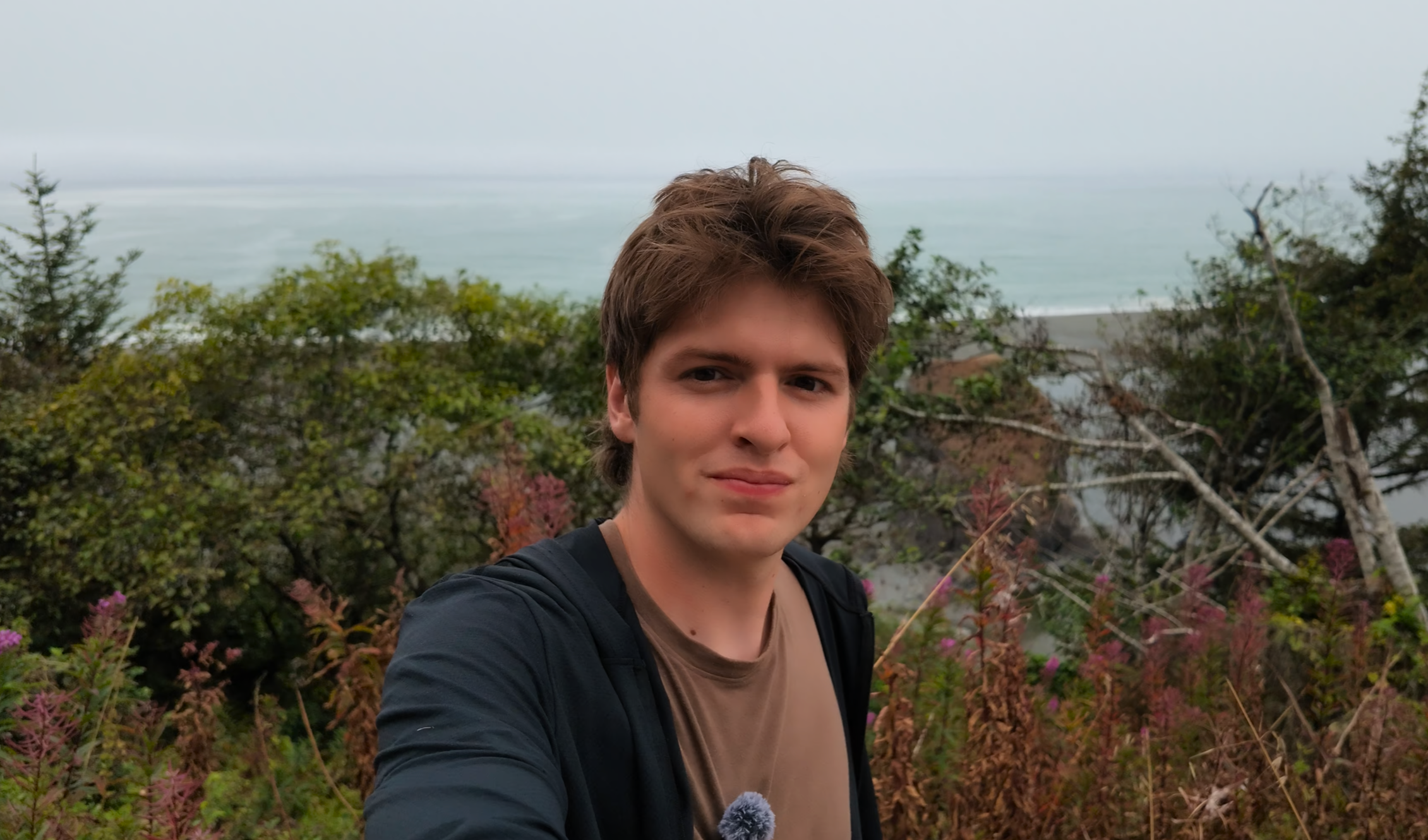
Dave stops along the Northern California coast.
Dave started solo camping as a teen.
"Probably 15 or 16," he said. "I left home at 18. I didn't really wanna stick around, so I just left. As funny as that sounds, I always wanted to travel. I had a pretty broke family growing up, so kind of just did my own thing, and it worked out."
Dave discovered he could travel in other locales in the winter, though.
"Around last Christmas in December and January, I was in New England," he said. "I was in the Glen Falls, New York, area and I did Vermont. I did a whole series on New York and Vermont, all that. I did some asylums, an old abandoned hotel. Around here, they don't plow the roads. Out there, we had a blizzard warning. I went out anyway and they were plowing the roads. There was no road you couldn't get to. They actually plow the roads out here. It sounds funny, but it's such a contrast to the West where it's the complete opposite. Maybe they throw some salt on the road for you, which will just damage your frame, but over there they actually plow the roads. It's even during a blizzard."
While exploring abandoned areas, Dave has come across noteworthy items.
"I've found a gun before that was pretty crazy," he said. "It was in a ghost town. I thought it was broken at first because it didn't have a normal trigger. It was a gun they used to have in the 1940s, '50s. It was this cheap tin can type gun that you'd never really use unless you had to. So I found one of those, which was all rusted. That was really neat. I was at an abandoned house before, and I found a backpack. And in this backpack was giant two bags of weed. It was giant gallon bags. It was suspicious. I didn't want to have anything to do with that. One of my more popular videos is I found this bus on Google Maps and I decided to go out to it. I didn't know anything about it. When I was there, I found these medical documents. It was talking about a guy who was having lung issues and it was terminal. It was some really nasty stuff. All his personal belongings were in this bus. It was really odd. I went home. I edited the video. I looked him up. The only two results were from years ago. It was from a missing person's case."
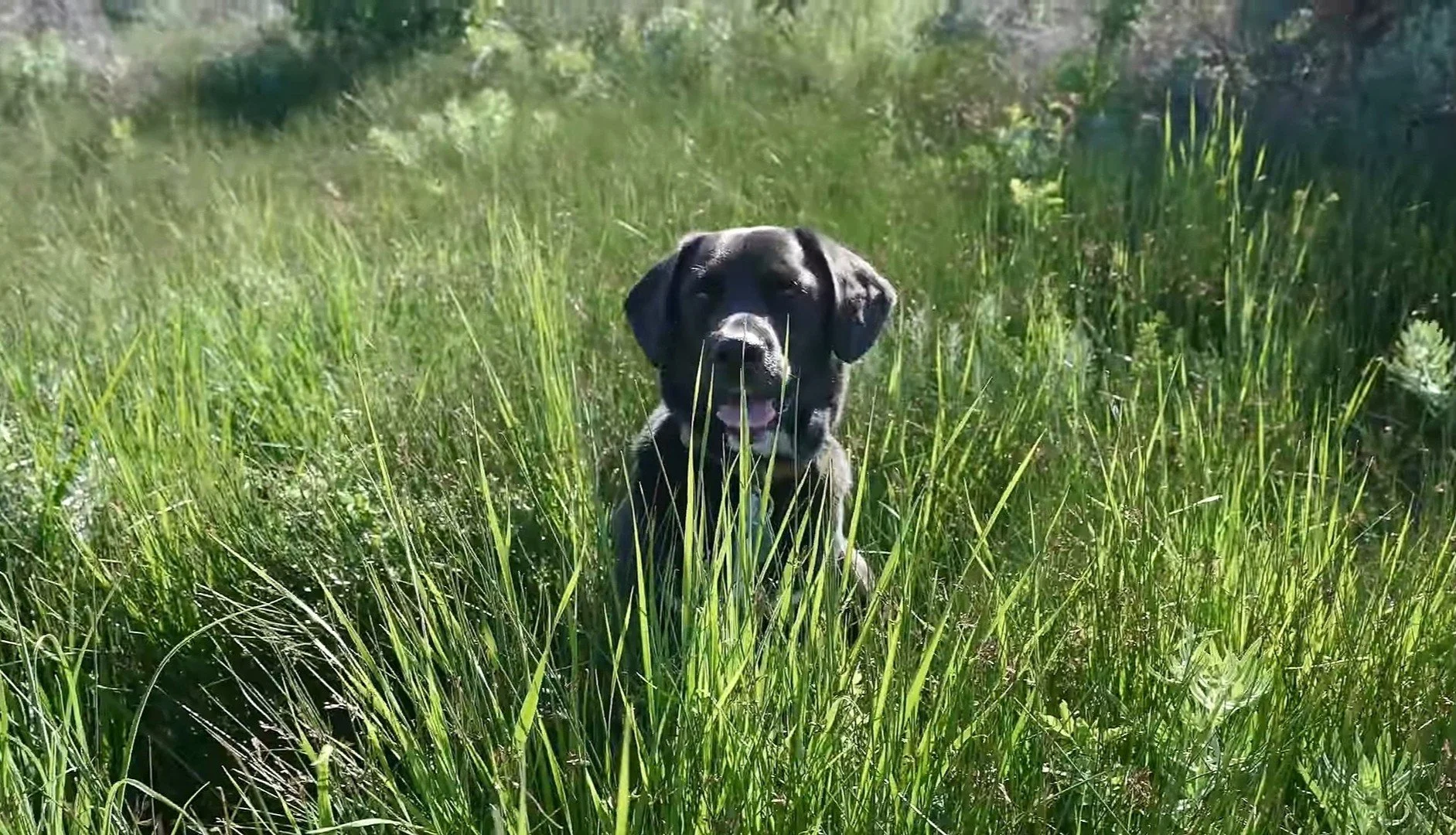
David’s loyal companion Lee poses in Central Idaho grass.
Dave carries protection to his often remote destinations.
"Prevent animal encounters," he said. "Bear spray is a good one. That is the number one thing. I have a 10mm. It's a Glock. That's my primary carry now. I have a chest strap for it so I could pull it out real quick. I also have a .357 revolver, which is absolutely beautiful. It's a blued (rust-resistant coating) one with a wood handle, so it's a real old school gun. I have a bit of a gun collection and I always have a gun on me if it's out in the mountains."
Dave also has an early warning detection system with Lee.
"He'll pick up stuff," he said. "I haven't had any real animal encounters yet. Biggest thing I've had is rattlesnakes. In Nevada, my dog, he doesn't go running around as much unless it's wintertime. I've gotten good at finding where a snake would be. If it's a real rocky area, a lot of rocks, snakes love that. If it's sandy with just sagebrush, there could be, but I've never seen snakes in those type of situations. Everywhere I've ran into wild animals, it's been Nevada and it's rattlesnakes. And rattlesnakes will alert you. But the trip about rattlesnakes is there's been situations where I've walked right past, cause you won't see rattlesnakes. They hide, they blend in. So I've walked right past huge rock piles. They're surrounded by old mine tailings. So it's all rock. And the place I've walked past, when you're 10 feet away from that area, you'll hear the rattle. It's because they don't want to attack you. They just want to tell you to stay away."
Dave takes precautions with his garb as well.
"I wear snake gaiters, which are protection that goes up to your knees because most rattlesnake bites will be below the knee," he said. "And it works out. I've never had any encounters too bad with rattlesnakes. They want you to stay away from them. Only time I would worry about a rattlesnake is if I was jogging. If I was running and I surprised it. Or a lot of rattlesnake bites happen if someone's drunk or mess with it. But if you're just out hiking, it's not too big of an issue. I haven't had any other animal encounters so far."
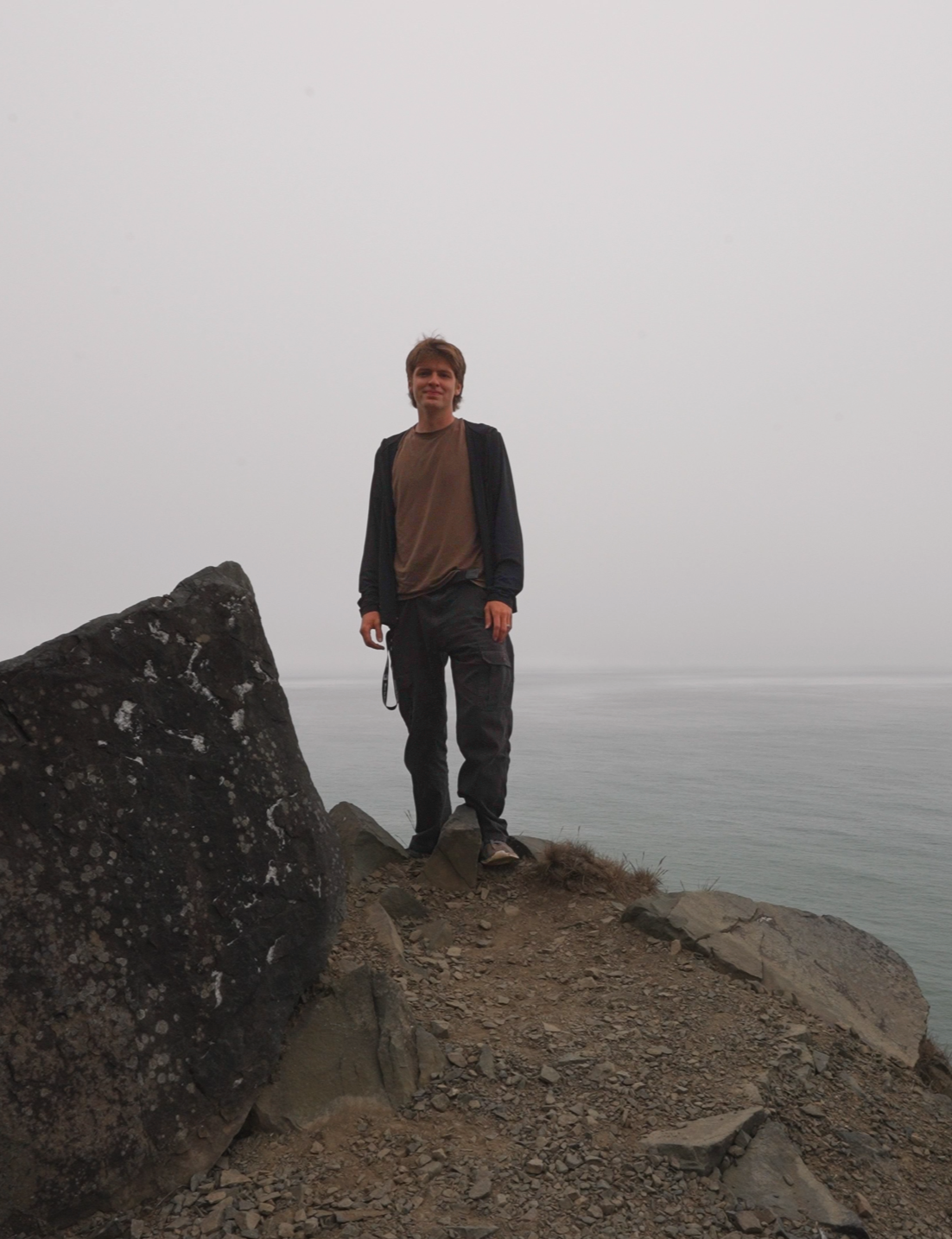
Dave stands at a cliff edge by the Northern California coast.
Dave doesn't fret about the most infamous denizen of the woods.
"As people, we really don't have much to worry about when it comes to wildlife, even a grizzly," he said. "People like that example because they are apex predators. Attacks are usually not something that happens. And even if they do against a grizzly, stuff like spray and a gun is more of a deterrent than something that's gonna be lethal to them. I've ran into grizzlies before and black bears. If you've ever seen one or encountered one, if you yell at it, it's gonna take off. Grizzly, they look at you and just keep walking right past you cause they're not afraid of you. They know they could kill you in two seconds. But the chances of them doing that is pretty low. With dogs, it does increase. So in a grizzly area, I do usually keep Lee leashed. But I haven't had any rough encounters with grizzlies, only good ones where they're close to you, they look at you and they're just going about their business."
Dave has aspirations to work in government.
"I want to do my master's in public administration, which is mostly government work," he said. "A lot of people go into public administration. Government workers, they genuinely believe they're making an impact and that they're making a change to the U.S. I would like to go into stuff like city planning, city budget, stuff like that, mainly state. The most impact you could make is at state level and not federal. Look at Congress, look at them trying to pass a bill. But at state level, that's where stuff happens because you have little overhead, you have a lot of room, side to side. You could make impact and you could make change. At city level, at county level, you can make small impact, but state is really where it's at for the most part. I'd want to go into a state-level position after my master's or if I really want to keep going to school, I'll just do another bachelor's or PhD."
Dave wants his social media followers to follow suit and do their own exploring.
"I'd say sense of adventure," he said. "I try to do stuff that others don't. I try to go outside of the norm, be a little bit strange and that works out. Get a sense of adventure and go out and go explore. It's not as scary. It's not like The Hills Have Eyes. You don't have mutants up in the mountains or anything. You're not gonna really run into anything real severe out there."
Dave also enjoys providing content for those who can't embark on their own adventures.
"A lot of comments I get from older individuals who are like, hey, I used to do this when I was younger," he said. "I can't do it anymore, so I enjoy your videos. I love that type of comment. I get those all the time where you're going out and someone else is being able to see through your eyes what you're seeing and go with you. I love that being able to do that. There's so many places out there. I would love to see everywhere and visit different countries and just travel. But just exploring the U.S., you could spend a lifetime here alone and you're still not gonna see everything."
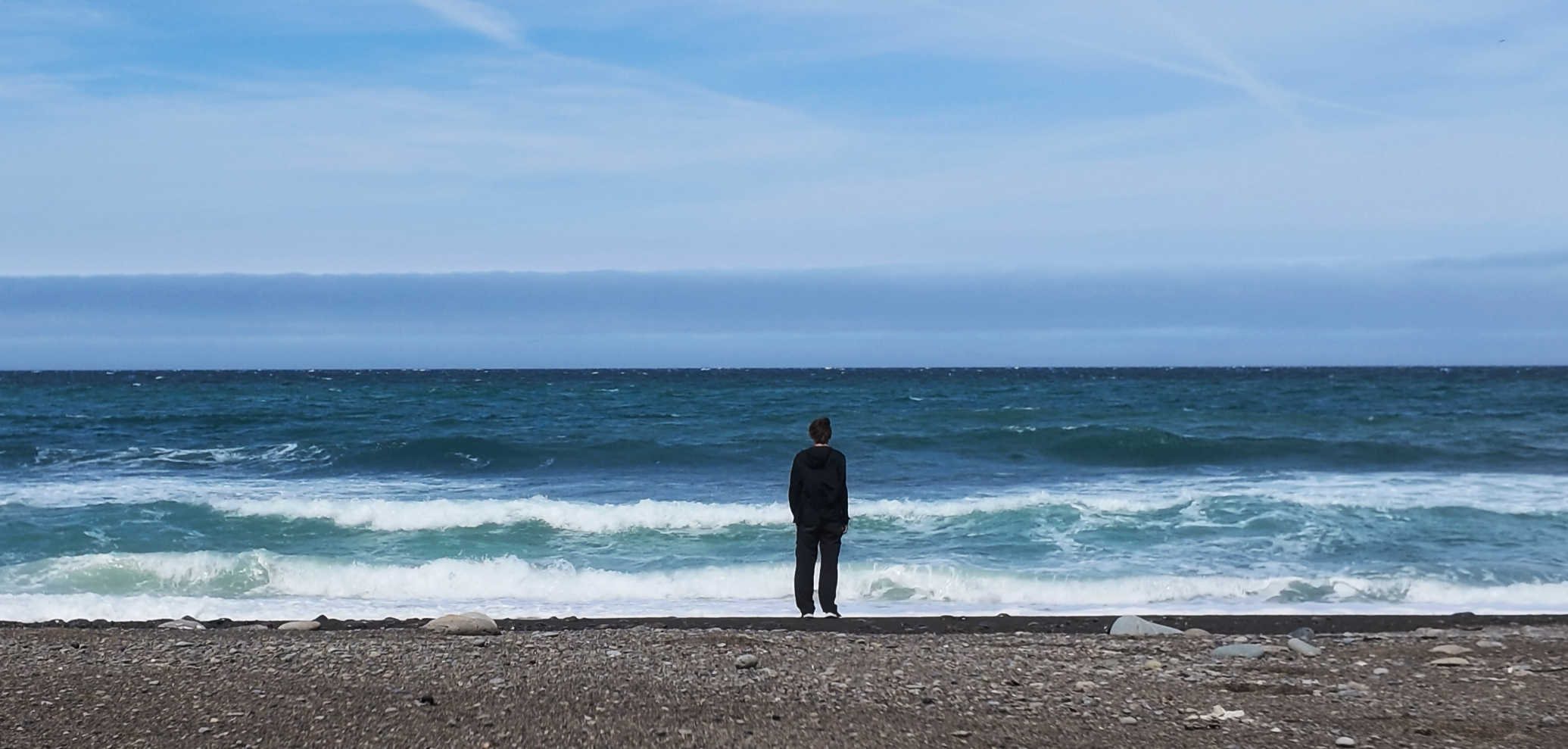
Dave looks out at the Pacific Ocean in California.
There's one spot that intrigues Dave even though it's an unlikely future stop.
"I was a huge fan of Chernobyl," he said. "I've always been fascinated by it. Unfortunately, especially with current political situations and now around Chernobyl, there's landmines that were planted, it's never gonna happen."
Dave developed a system to prevent burnout from creating content.
"Writing, editing, creative work, that's creative stuff," he said. "You only have so much creative energy. So with YouTubers, it's the same thing. They only have so much creative energy to edit a video. Till that creativity runs out and you have to take a break. So I found a system. I work in batches. For instance, I head out to Montana for two weeks. I'm going to be filming every single day. But then after that, I'm going to take a break and I'm going to go straight to editing. I edit in batches while I edit three videos in a week. It takes two to three days to edit where you only used to take a day, maybe. I have my off-season where I don't film, and then I start editing in that off-season and I edit heavy in that off-season. And then I have a film season. I'm filming. I still edit once a week. Everyone only has so much creative energy. But if it's filming, I could film all day. It's point and shoot. You're just out sweating in the mountains. It's a bit different."
Dave dispensed advice to aspiring explorers.
"As generic as it sounds, just go out and do it," he said. "That's all there is to it. If you want to film, start filming. My main camera is a Sony A7S III. It's about $3,000. My whole setup is about $6,000. If I was new and I was looking at that, I'd be like, holy crap. But obviously, nobody starts with that. You start with a GoPro or cell phone and that's good enough. The other stuff viewers don't notice. As long as you have a good story, people bypass lesser quality. It's not a big deal."
The Grid doesn't disclose the legal names of content creators who don't divulge them on social media.
Dave's YouTube channel: https://www.youtube.com/results?search_query=dave+explores
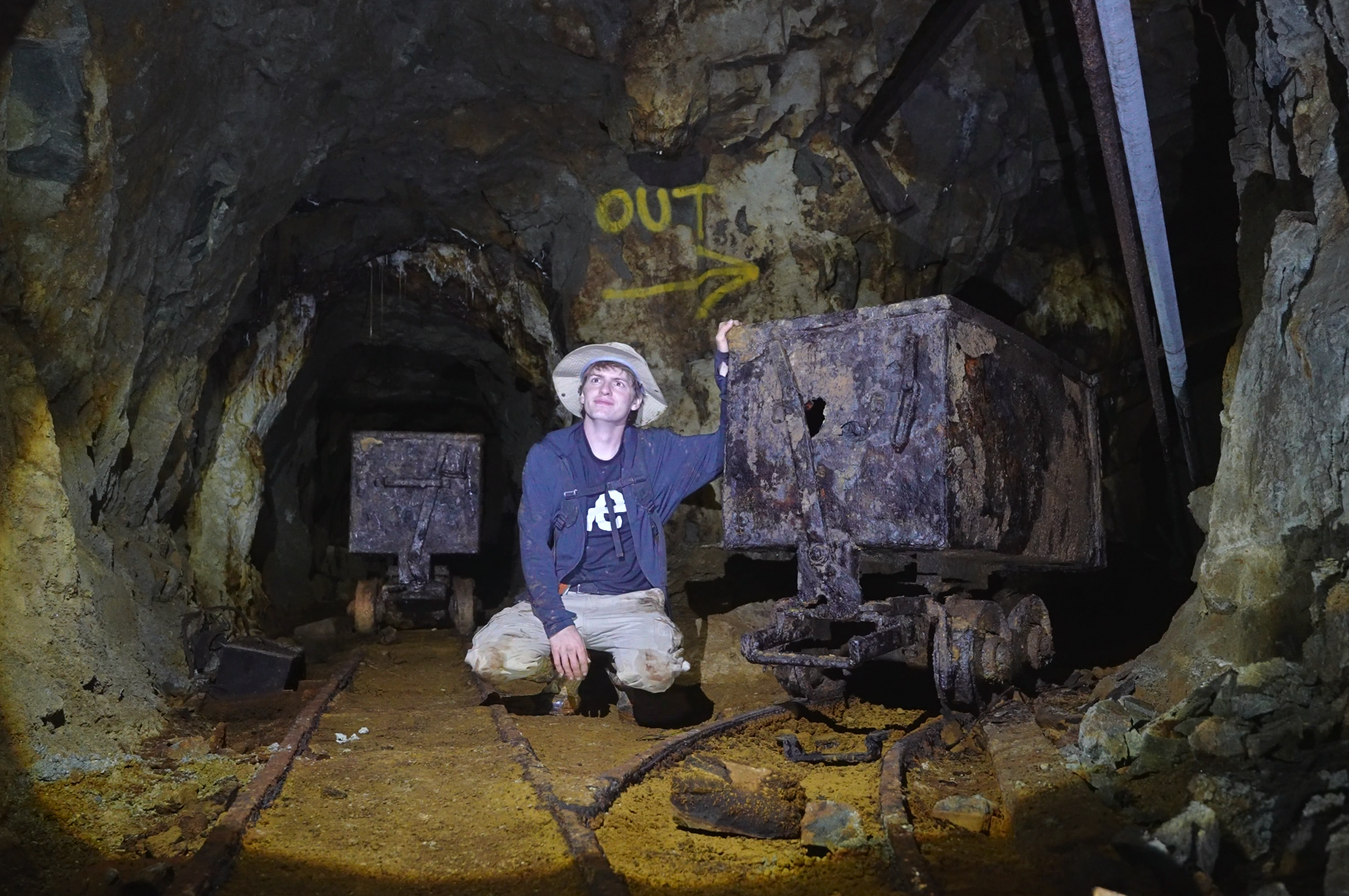
Dave explores an old gold mine in Washington State.