

Pianist teaches others to play the keys
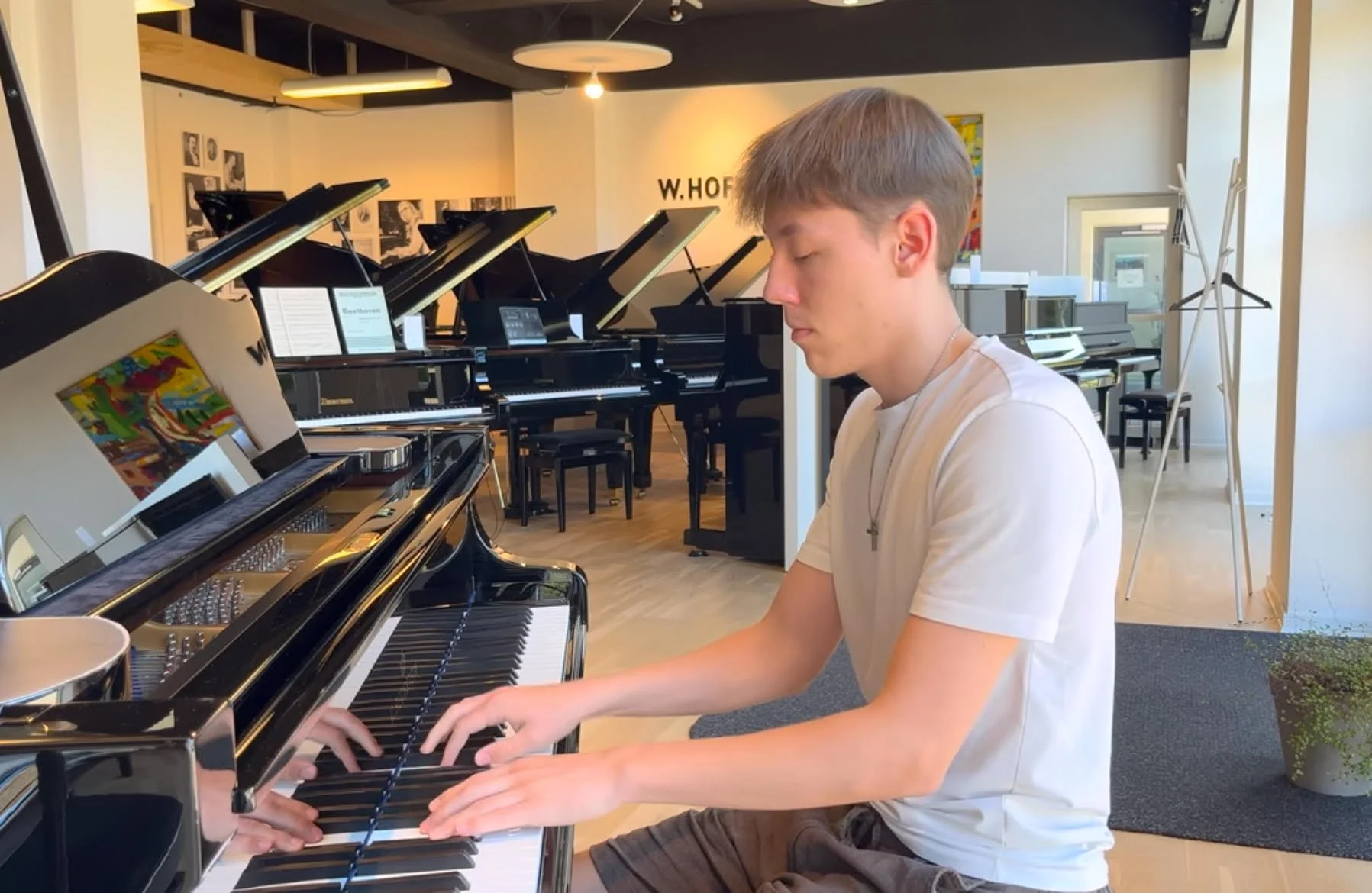
Oscar Linde plays the piano. Photos submitted
By Tom Victoria
Oscar Linde not only plays the piano, he teaches others to make melodies, too.
The musician recalled how music became his life.
“When I was 7, I started learning to play the piano,” he said. “My parents have a musical background, so they wanted me to play some kind of instrument. The piano was an obvious choice, so I started taking private lessons and learned to read music, to sight read and play a lot of classical pieces.”
Oscar, 21, of Denmark eventually expanded his repertoire.
“Then after some years, when I got pretty decent at that, I got a new teacher, a former concert pianist here from Denmark, a very talented young man who also taught me a lot of stuff,” he said. “But at that time, I also myself became more and more interested in modern music, also how you can sometimes free yourself from the sheet music and free yourself from your memorization when you want to learn pieces and play more freely.”
Oscar then pursued that new musical avenue.
“Then I got a more rhythmical trained teacher who taught me a lot, especially about music theory, about how I can sometimes also listen to a song and then actually compose my own cover of the song basically without having the sheet music just by listening to the song and using my ear,” he said. “That really caught my interest.”
Oscar realized he wanted to share his love for playing by instructing others.
“A couple of years ago, I thought why not start teaching also because I really enjoyed playing myself,” he said. “I thought that it would be a great opportunity and a great experience to try to teach also. I got my first physical students, still have some of them who come to my house here in Denmark, that I teach the piano. I really enjoyed teaching. It was really something that I enjoyed doing and look forward to having my students.”
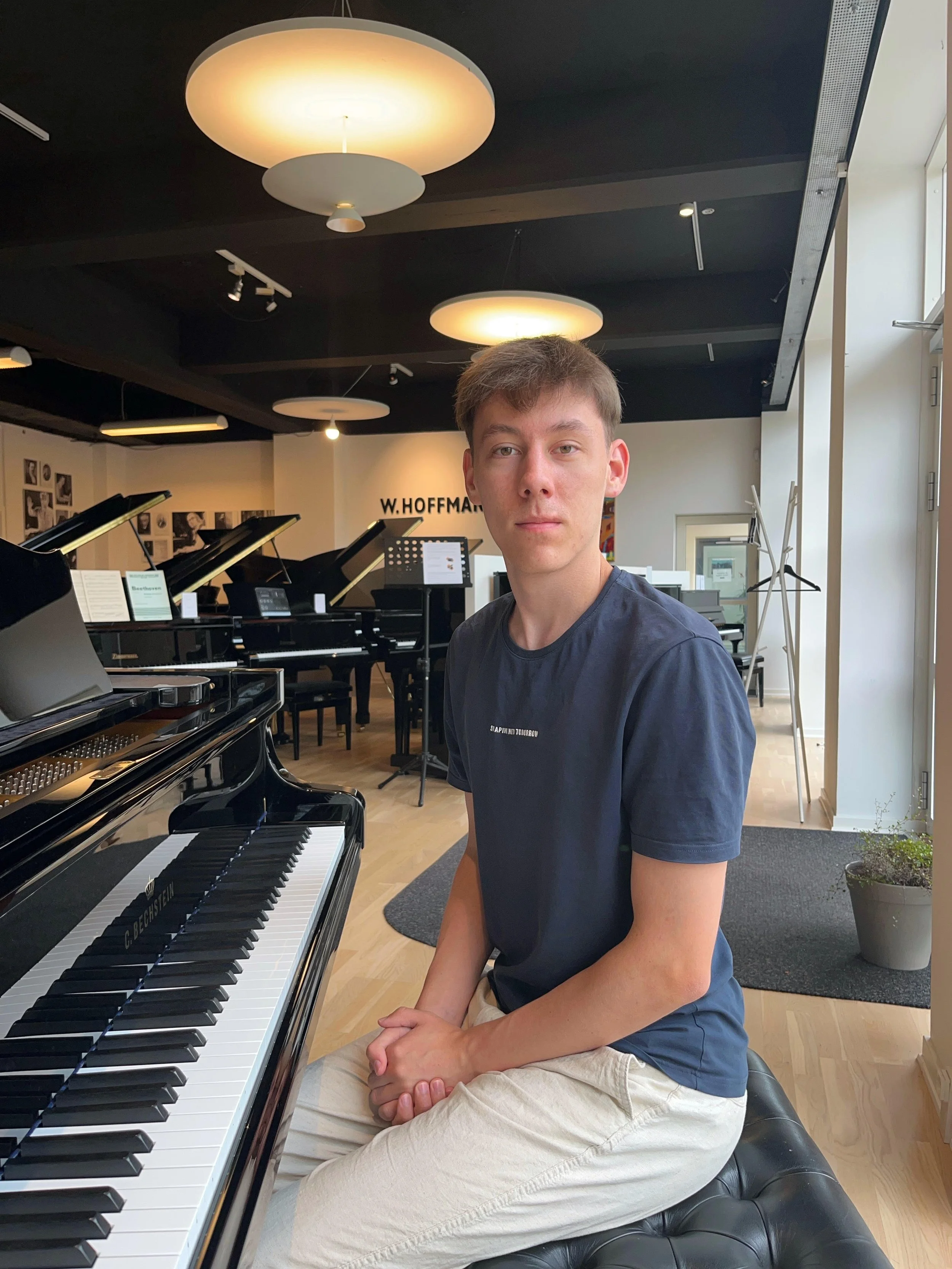
Oscar then extended his reach.
“Around a year ago, I went full-time basically on my teaching,” he said. “I now have my business that I run where I offer online teaching as well. I teach people from different countries: Denmark, Norway, Sweden, Germany, the UK, United States as well. That's basically my big passion. I have my teaching, which is my main thing. And then I like to inspire people on my social media as well.”
Oscar foresees teaching being his main focus going forward.
“I believe that will be my main thing in the future,” he said. “That's something that I really, really enjoy to inspire people and to see people realize their potential and start playing some of the songs that they really enjoy and that they love to listen to. That's one of the main elements in my teaching. It is that my students play the music that they choose themselves and that they really enjoy.”
Oscar said beginners must adapt to using both the keys and pedals.
“There's a lot of elements to the piano,” he said. “Of course, the coordination between both hands and also adding the pedaling. With both hands and the feet as well, that combination and coordination you need for that is typically the most difficult thing to learn for beginners.”
Oscar said players also need to employ another sense.
“Using your ear actively, that's one thing that I work a lot with,” he said. “That means a lot of people when they listen to music, they listen passively. They don't listen actively to exactly what is going on in the music that they are hearing. So starting to use your ear to actually understand what you're hearing and then play that on the piano afterwards, that is also something that is difficult for people who don't have what we call perfect pitch. Most of us have what we call relative pitch. That means we can hear if the next note is higher pitched or lower pitched than the previous one and we can hear some intervals in music. So when I work with my students trying to improve their relative pitch, that is also something that is difficult in the beginning, but really a great tool. So improving their relative pitch and of course, the coordination between hands and feet.”
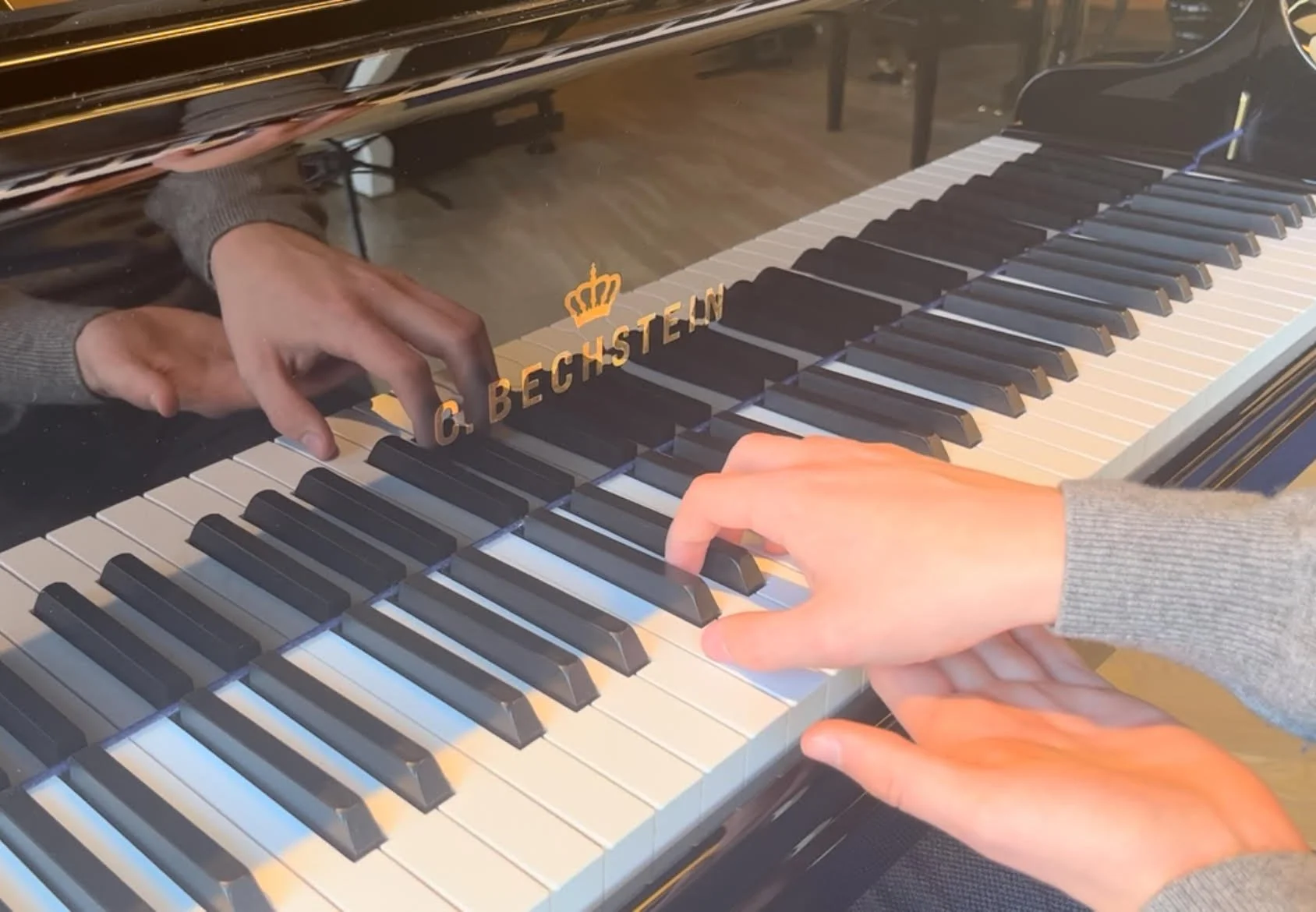
Oscar can play music by ear alone.
“I know both how to read music and also how to play something by ear,” he said. “Both things are really valuable. But when it comes to classical music, what you will need is the ability to read music. You need that when it comes to classical pieces.”
Conversely, Oscar said reading music isn’t required to play modern tunes.
“If you're more interested in modern music, in modern pop songs, you wouldn't necessarily need that because that kind of music is not written for the piano like classical music,” he said. “It can be played on the piano still, but you can create your own cover of those songs in thousands of different ways. So with modern music, you wouldn't need the ability to sight read, but you would with classical music. But the combination of the two is the best case for everyone.”
Oscar said musicians should know classical pieces even if they’re not playing them.
“It's not a bad idea at all for anybody to learn to understand classical music as well because that is the foundation of all of the music that has come after the classical period,” he said. “That is important to understand. But by understanding modern music as well, you can see the similarities between the two genres. It's definitely important to know about classical music, but it's not necessary to be able to play that if that is not your main focus. Let's say you're an adult and you just want to start to play and you don't have these big ambitions of becoming a concert pianist or anything, then you don't need it. But it will be helpful to know something about.”
Oscar plays music he doesn’t necessarily listen to for pleasure.
“I still play a lot of classical pieces, but it wouldn't be something that I listen to in my everyday life,” he said. “But playing (Frederic) Chopin, playing (Claude) Debussy, all those great composers, I really enjoy that because there's so many details and there's so much stuff that you can dive into when you sit at the piano and learn those pieces.”
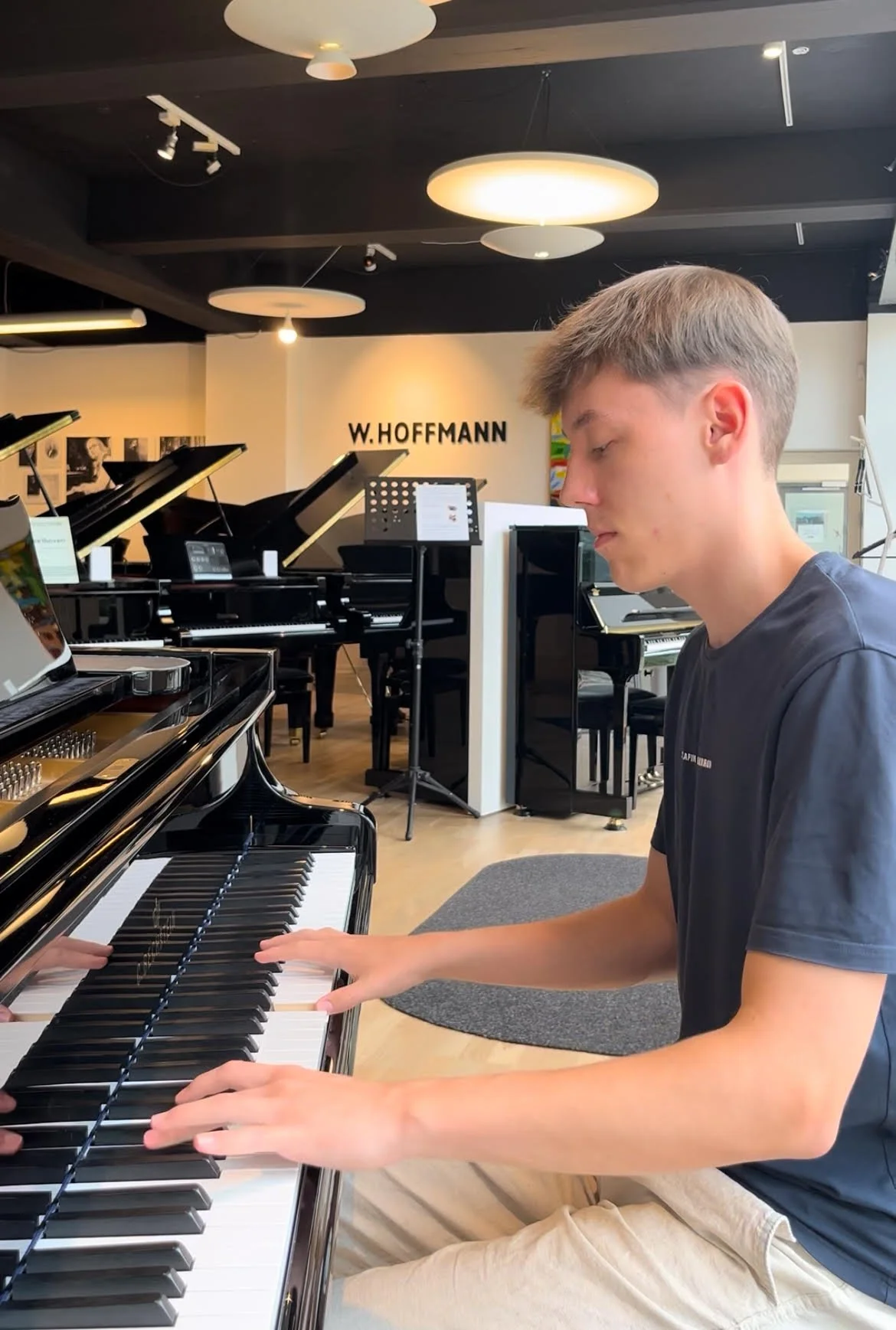
It works the other way for Oscar as well.
“I really enjoy playing those pieces, but it wouldn't be something that I would listen to in my everyday life and also vice versa,” he said. “When it comes to modern music, there's a lot of modern music that I just enjoy listening to, but I wouldn't necessarily learn to play it on the piano because it's not suited for the piano. But I do still play a lot of modern songs on the piano that I then listen to and sit down and try to compose my own cover of basically.”
Oscar favors playing less bombastic pieces.
“I enjoy softer pieces, some pieces where you really recognize the small details and the dynamics in the songs that you can then add when you're playing them,” he said. “When it comes to classical pieces, I mostly play softer classical pieces. With modern music, I really play something from both worlds. I do both play some more melancholic, softer modern music, but also some bigger songs, also songs that have elements from rock, not hard rock. I also also play that on the piano, which of course are more hard pieces and not soft in any way. With classical music, I definitely enjoy soft and softer pieces.”
Oscar takes full advantage of the piano’s versatility.
“That is the main thing that the piano has that many other instruments don't,” he said. “You can literally play whatever you want on a piano because you have both your hands and the whole spectra of music captured in a single instrument. On the piano, you can play everything and you can do it in so many ways. You can interpret modern music as you want with the style of your cover. You can make it personal.”
Piano can also be employed in comedy as the late Danish-American pianist and actor Victor Borge demonstrated to the delight of audiences across the world. Oscar appreciates Borge’s talent.
“He was one of a kind,” he said. “By mixing his music skills together with comedy, that was extraordinary. I don't think I've seen anybody after him that has done what he has done because of his piano skills. Many people don't see that. They were really top, top level. And of course, he had the humor as well to combine that.”
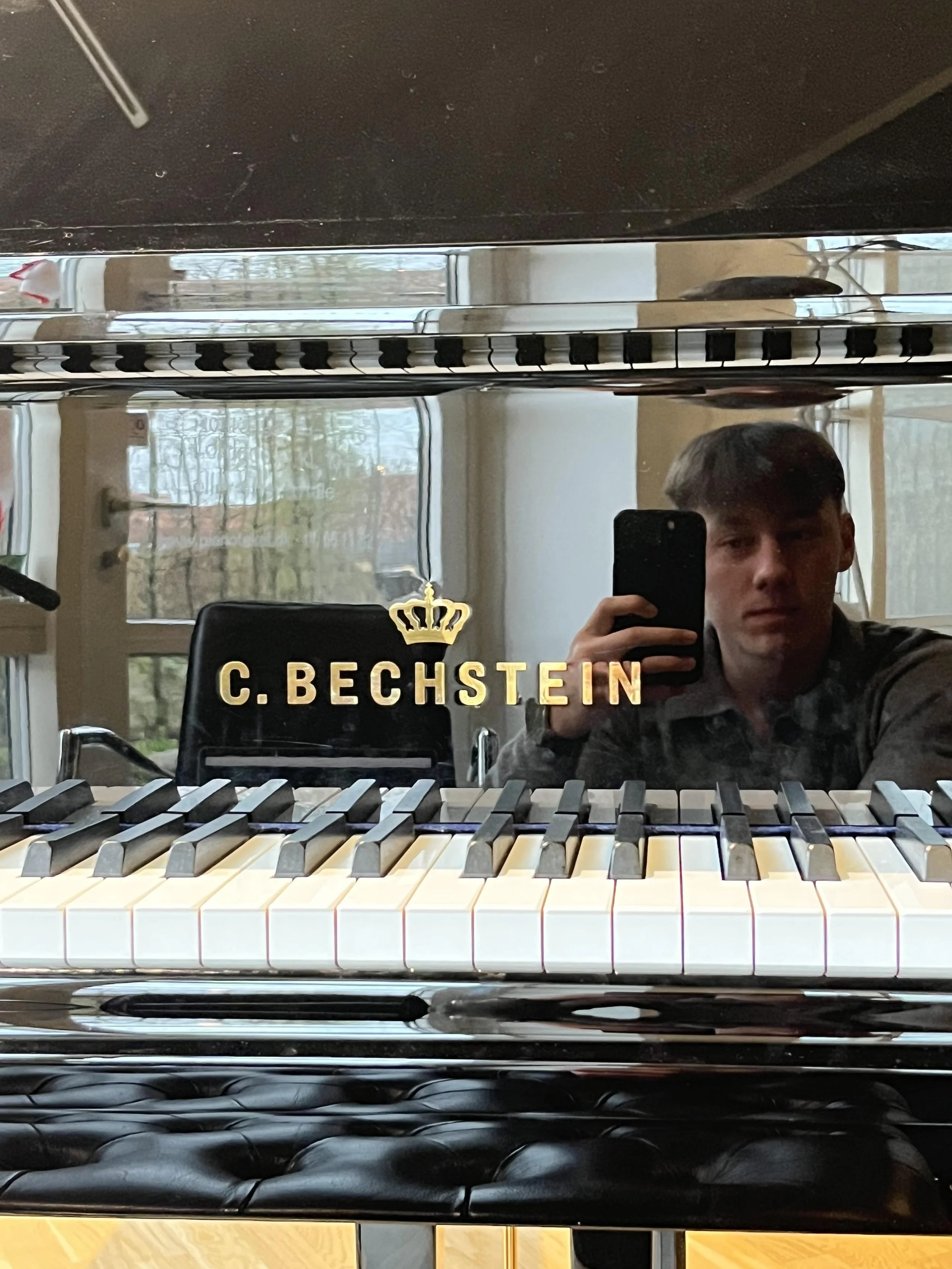
Although Oscar played the piano since he was a tyke, he was a little older when music came alive for him.
“I started when I was 7, so some years after when I was maybe 11, 12,” he said. “I learned the Fur Elise (Beethoven’s composition) and that was the first piece where I really felt the music and I interpreted and created some dynamics with the piece myself. Whereas the other pieces I mostly just played what was written and played it as it should be played. And the Fur Elise one, that was the first piece where I really felt the music when I played it.”
Although Oscar doesn’t do anything specific to take care of his hands, he avoids the risk of injuring them.
“If I have to do something where there's some risk of damaging my hands, I normally wouldn't do it,” he said. “Always taking care of my hands, but not anything special. Just avoiding any damage, anything happening to my hands.”
Oscar would rather be remembered as an inspiration than musician.
“Not solely because of the students that I've had, but also because of the impact that I've made on my social media for people to get started playing the piano,” he said. “I will in the future have a lot of students, but my impact on my social media, where I have thousands of followers, will be even bigger. So inspiring people to start playing and to learn some of the pieces that they enjoy is the main thing that I hope to be remembered for one day.”
Oscar appreciates having social media to attain a wide audience.
“It wasn't something that I thought I would ever do a couple of years ago,” he said. “But then, I started posting just my hands, no face, just my hands and playing some pieces to get out there and see how people would react to my content. After some time, I also started posting my face, posting myself talking to the camera, explaining stuff and actually teaching. The internet is an amazing place for many things. For some things, it can be a dangerous place, but to get your name out and to inspire people on a larger scale, it's an incredible place.”
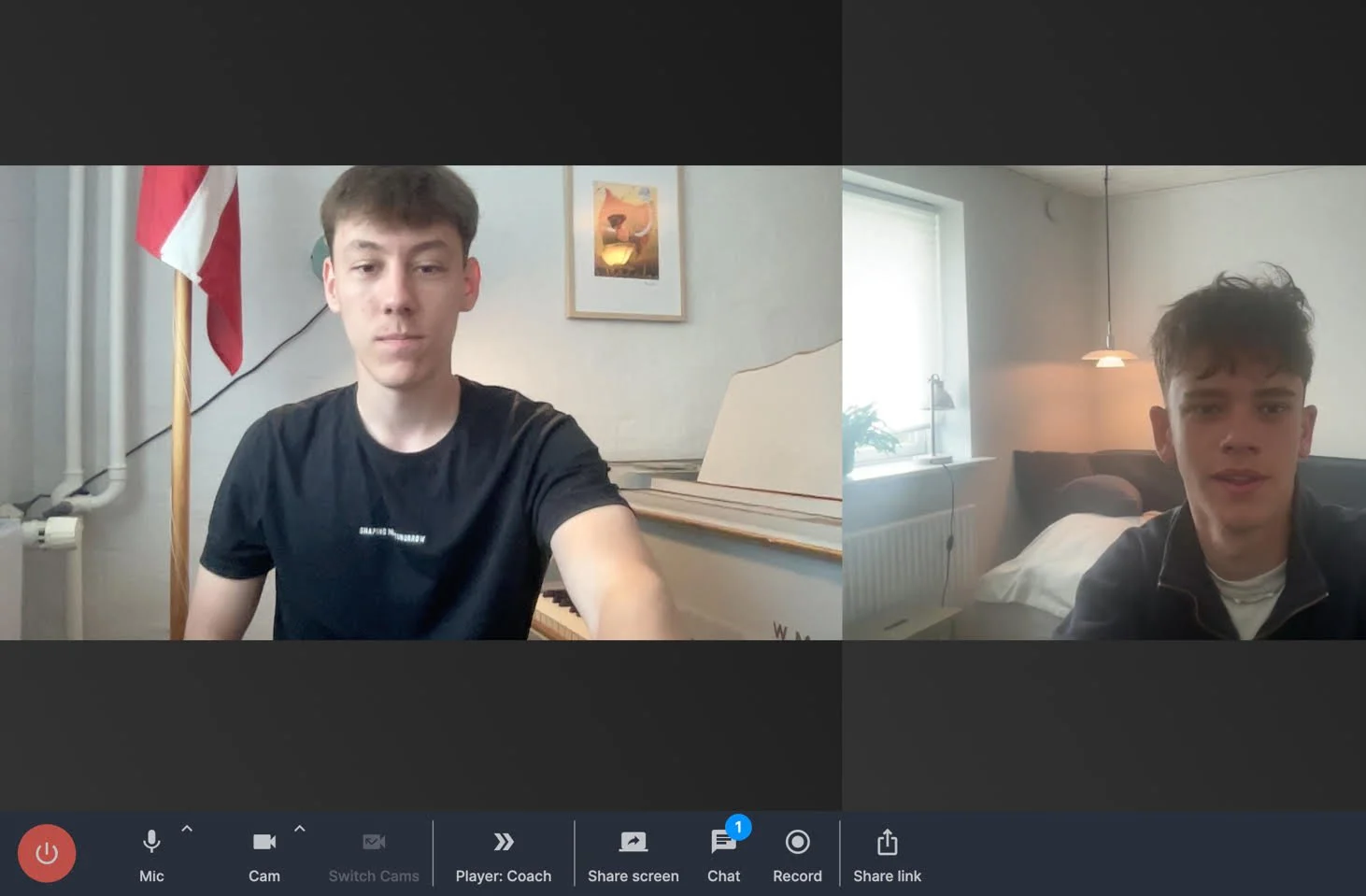
Oscar instructs student Lasse of Denmark
Oscar said anyone learning to play the piano must have patience.
“Also because with my teaching, it focuses a lot on both the theory and the practice by playing some pieces and then combining those two,” he said. “Some people, they rather just use all of the time playing some pieces without spending their time understanding the theory behind it. Typically, the impatient people tend to do that. I always tell them you need to understand this theory for you in the future to make it much easier to learn new pieces.”
Oscar keeps his students on track.
“I always try to motivate them and make sure that they do the stuff that we talked about in the lessons,” he said. “We have some deadlines and the things that we're working on. I have a system to prevent the impatient students from not doing the stuff that they are told and not working on the right things. In my teaching, you can be an impatient student and still get far in your piano playing because I have a system that prevents you from just playing some pieces instead of also learning the theory behind.”
Oscar listens to his student play and watches their hands.
“That's more of the technical stuff with the hand movements and their fingering and everything,” he said. “Both things are really important. You can't only be good at one of them, you need both. So I am very, very focused on both aspects of my students playing.”
Oscar said music is a way to express himself better than words can do.
“I am not the best at expressing myself with my voice, not as much as I would like to be,” he said. “Definitely music has been one of my main ways to express myself both on a smaller stage within my friends and family, but also now on a bigger stage on the Internet.”
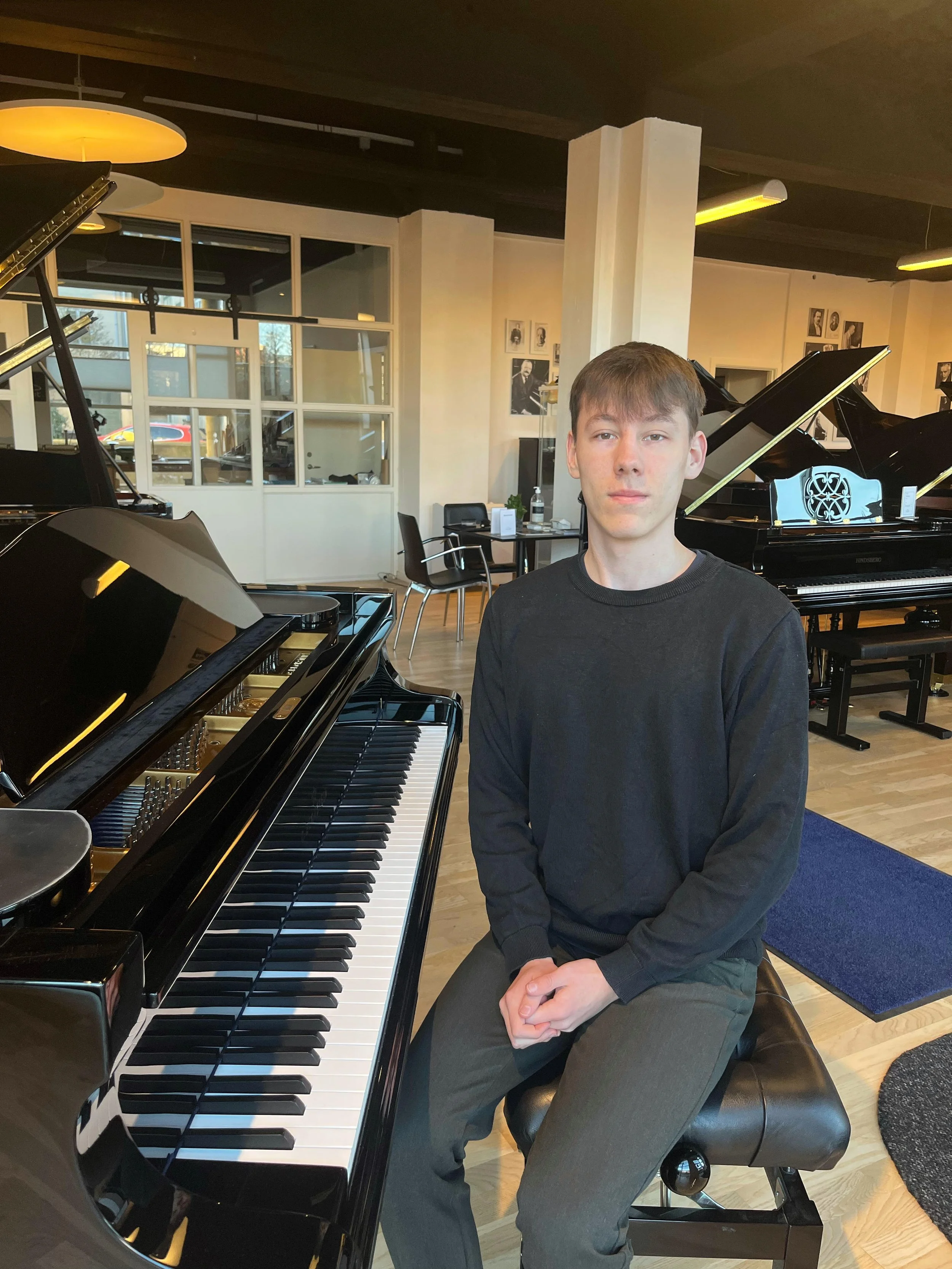
Oscar squeezes in hobbies when possible.
“I play soccer,” he said. “We call it football here in Europe, but I play some different sports. I go to the gym. I also hang out with my friends. I also like to travel.”
Oscar said pianists wanting to begin teaching others need to practice the art of instruction.
“The most important thing if you want to teach the piano is to get some experience first,” he said. “Therefore, I would start by finding some students in your local area that you can give some free lessons in exchange for some reviews that you can use. On the side, I would start creating a personal brand on social media where you can show your skills to the world. Let the passion be the fuel in the beginning and when you are ready, find a business coach who can help you scale it as a sustainable business.”
Oscar dispensed advice to aspiring pianists.
“Start by finding an instrument,” he said. “It doesn't have to be anything special. It could be a secondhand upright piano. It can be a digital piano from a reliable brand like Roland or Yamaha. And then simply start by finding out what it is that you want to play. Is it classical music? Is it modern music? If it's classical music, learn to sight read. Find a teacher from the beginning. Don't wait for that. Just find a teacher who can teach you how to sight read if you want to play classical music.”
Oscar said those wanting to play modern tunes should also seek instruction.
“If you just are into modern music, just want to play some of the pieces that you listen to on an everyday basis, study music theory, understand how scales work, how chords work, how the key of the song impacts how to play it,” he said. “And then also get a teacher. It could be me. It could be a different teacher. But always find a teacher and get started playing some of the music that you enjoy which motivates you and which keeps you going on your learning journey.”
Oscar’s Instagram: https://www.instagram.com/oscarlindepiano/
Oscar’s YouTube channel: https://www.youtube.com/@oscarlindepiano