

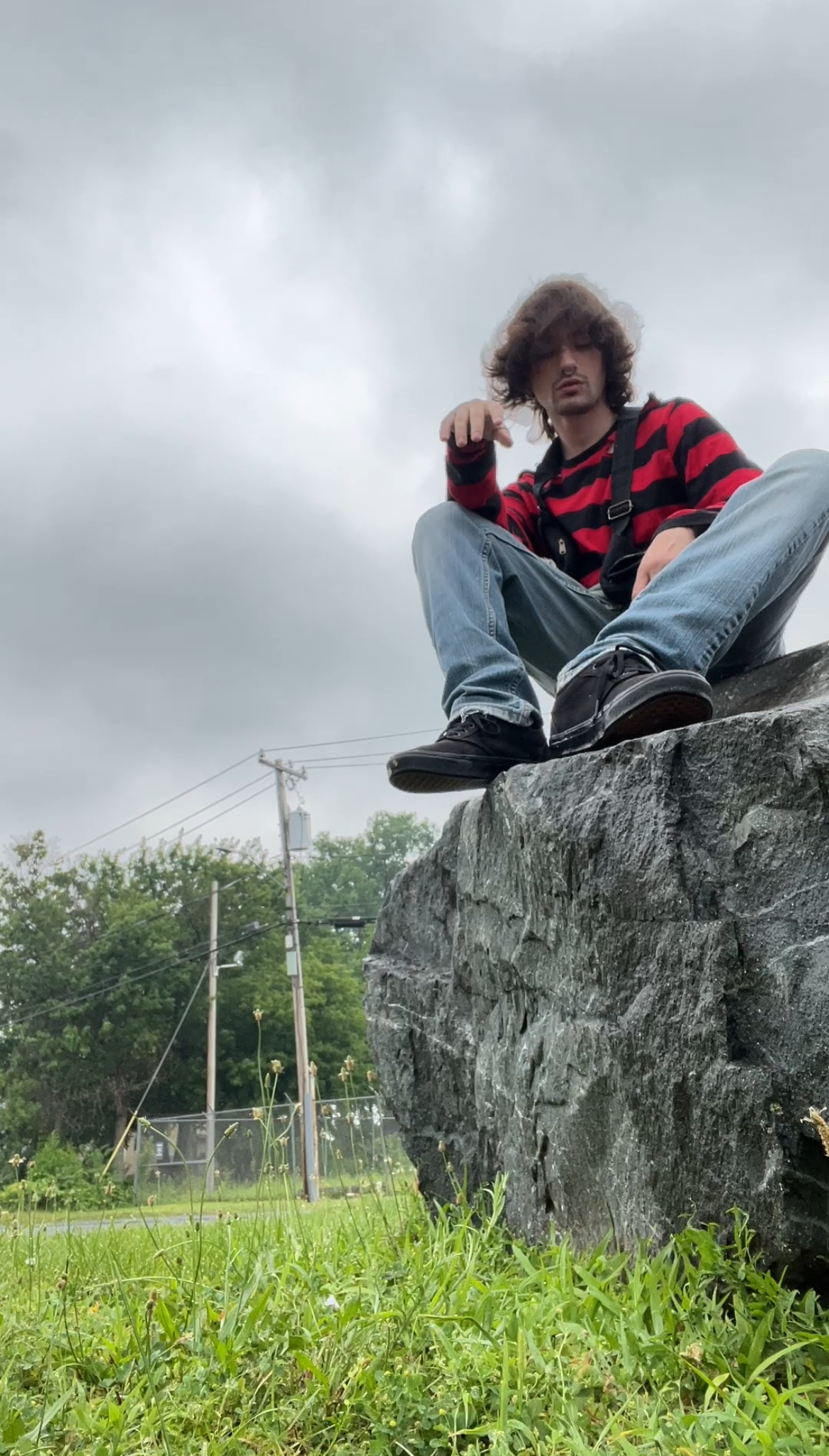
Artist Revan D’Abundo mixes styles of music in his work. Photos submitted
By Tom Victoria
Revan D’Abundo is making their own mark on the music scene.
The New York artist known as findrevan said they don’t want to be confined to one style.
“I want to move music past the idea of genres,” they said. “I don't like the idea of categories and labels. I like to blend things. I make whatever I think sounds good and that lives up to my standard. I heard a long time ago that when you're getting into music, you should start with making music that you enjoy, that you would listen to, that you think is good, and then the rest just comes along.”
Revan, 22, said it’s more important for a song to be an artistic vision than commercially viable.
“When you make something that's genuine to you, it always pays off in the long run even if it doesn't do so immediately,” they said. “It always pays off in the long run. I don't want to say necessarily cheesy, but the marketable songs that blow up, a lot of times, those artists usually end up hating those songs anyways because they don't like performing them all the time and talking about them.”
Revan’s newest song zombie was released on Halloween.
“The concept came a few weeks before and initially I hadn't even intended for it to be released on Halloween or have any connection,” they said. “But as the song was titled zombie and Halloween got closer releasing it then was sorta a no-brainer — pun intended. In terms of the concept, I had this idea that the song was going to be about people who drain energy written from the perspective of someone who does just that. The song talks about how the person has grown sick of the person they are with and laments some regrets about having a negative impact on that person. I decided that the term zombie would refer to people who drain energy. I feel like it's a nice flip on the typical way you would interpret someone being called a zombie and kinda gives the term a different perspective.”
Revan’s previous song bloody knees was released earlier that month.
“I released this song in early October,” they said. “This song was about the isolating feeling that comes after ending a relationship with someone. The concept for it came to me in a dream in which I heard a song from one of my favorite bands but the song didn't actually exist. I took pieces from the song I heard in my dream and formed bloody knees. It also feels very much like a fall song/vibe to me, which is cool because fall is my favorite season/time of year.”
Revan’s prior song new jersey potholes debuted in August.
“My latest release was a song called new jersey potholes,” they said. “The song is about finding yourself in a weird mindset during a transitional period. The inspiration for the song came as I was actually driving home from New York City. I'm from New York City originally, but I live in Albany now, which is about two hours from the city. I was driving on my way back to Albany. I was driving through New Jersey and I drove over a massive pothole and immediately destroyed my tire. I was stranded in Jersey for a few hours and I had a lot of time to think. That's where the song started. I started writing it that day.”
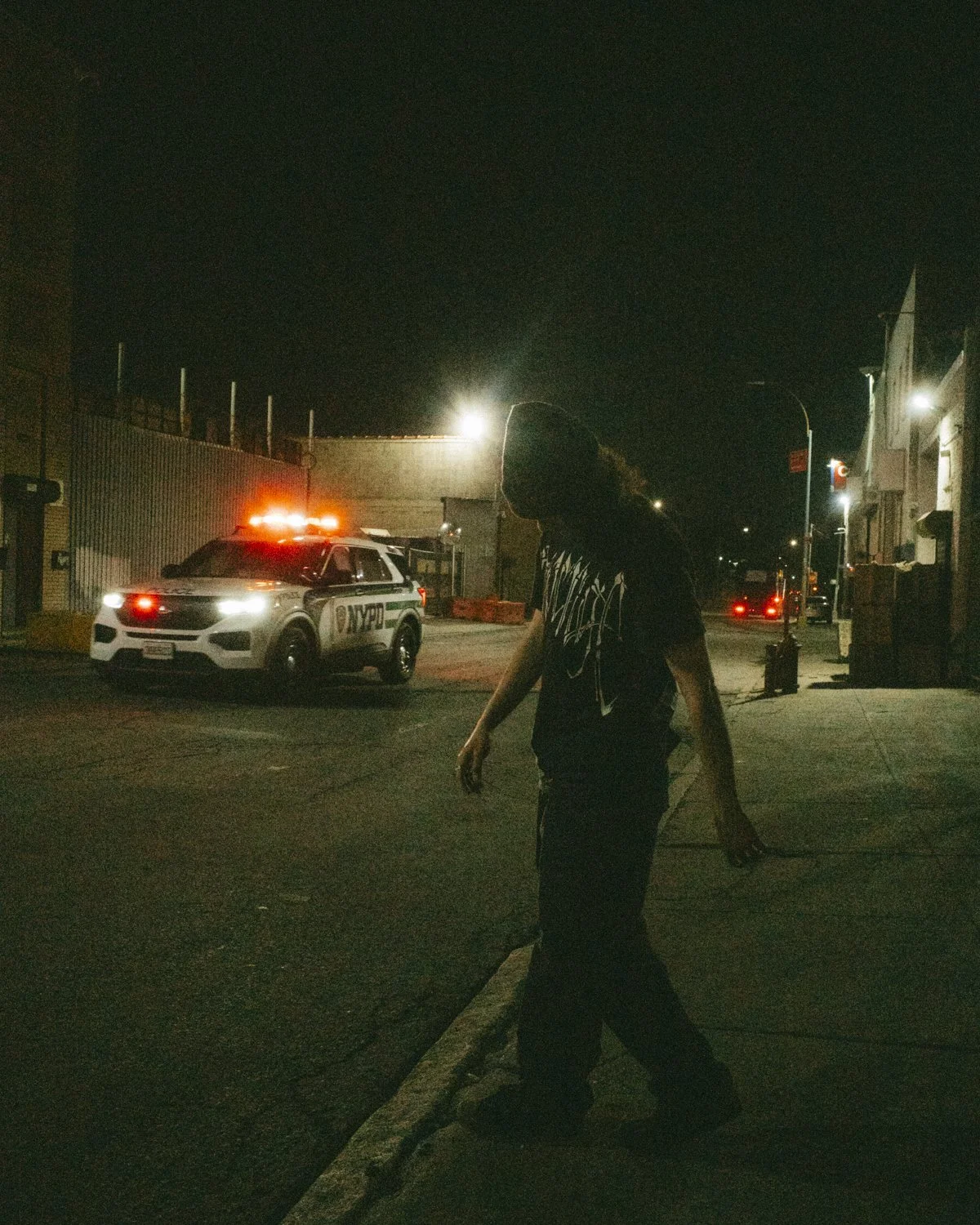
Revan expounded on the tune’s theme.
“At that point in my life, I had felt like I was in a transitional period,” they said. “I was trying to figure out a lot of things about my future that I wanted to move to. The song is about that. I based it around a lot of the more darker negative thoughts that I was having at that time. The song transitions through all these different dark themes that were in my head. I just go from one to the next throughout the song. To me, that expresses the transitional period, how you're going from one thing to the next. Above all, that day was just a bad day. It was a shitty day, so I wanted that to come through in the song.”
Revan’s prior debut was i met death on route 23.
“That song is more a sad slower song,” they said. “The inspiration for that actually came from The Sopranos. They made a spin-off movie, which is a prequel. In the prequel movie that they released, one of the characters, Christopher, because he dies in the (original) show, he's narrating from hell. I found it so interesting. He's talking about how his story ended, and he says I met death on Route 23, actually not too far from here.”
In the television series, Christopher Moltisanti as played by Michael Imperioli is murdered by his uncle Tony Soprano, portrayed by James Gandolfini, following a car crash. Revan took inspiration from that scene.
“I wrote the song not necessarily from his perspective, but I wanted to write it from the perspective of someone similar to him that had died,” they said. “It's written from the perspective of someone that's dead and had a lot of regrets about things that they wished that they had done differently when they were alive. The song is sort of speaking to a person that had some sort of big impact in their life. And they're just talking about the things that they regret.”
Revan keeps putting out new music.
“I've been in a really good space creatively recently,” they said. “I've been recording a lot, so I have a lot of different options. I'm testing out a few songs with some of my closer fans and seeing how they feel about it. I love all the songs myself, so I feel good about dropping any of them. I want to see what they think.”
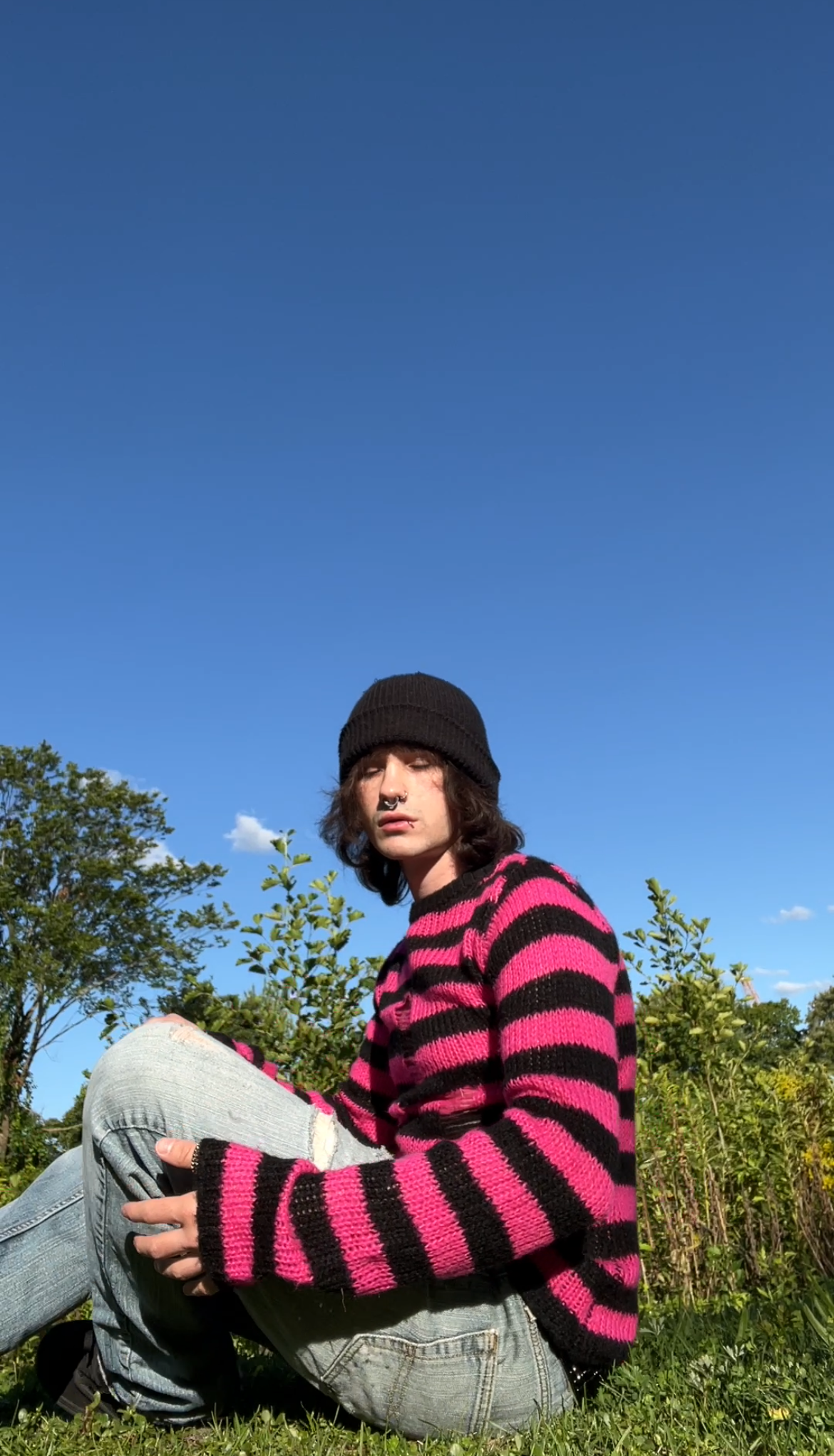
Revan will be releasing a three-song EP in coming weeks.
“This project is titled lithium goldfish,” they said. “It revolves around the story of Carrina written through her perspective. Each song tells a different part of her story ultimately ending in her death and her reincarnation as a crow watching over her remains. Carrina is a member of the Heaven’s Gate cult and in deep psychosis. Leading up to her death, Carrina begins to question her faith and relationship with the cult as she starts to see cracks in the foundation of the cult’s ideology/logic. Her questioning and uncertainty is perceived as disloyalty. She is ultimately killed by one of the other cult members, her best friend Cynthia.”
Revan was inspired to do the EP.
“The whole concept of this project came to me in a series of dreams,” they said. “I often experience dreams that have continuity. In this specific situation, I had dreams revolving around Carrina and her story for approximately two weeks straight. Some of the dreams were quite intense. In a few of the dreams, I was actually in Carrina's body living as her and in one of these dreams, I remember closing my eyes as Carrina and seeing a flash of images run through my head.”
Revan described how an image led to the EP name.
“One of these images was a goldfish in a plastic bag with a strip of tape on it,” they said. “The word lithium was written on that piece of tape which inspired the title lithium goldfish. I became fascinated with the visual and decided it would be the best title for the album as it is absurd and doesn't make much sense, much like most of Carrina's life and story.”
Revan doesn’t follow any pattern in writing music.
“I really don't have a specific process at all,” they said. “I don't really have a specific way. I usually like to develop a melody before lyrics. It really just depends, because sometimes a lyric will pop into my head and I write it down because I'm like, oh, I kind of like that. And then I'll come back to it and I start writing more, and then it becomes the foundation. Sometimes the melody will come to me first, so I will record me humming it or record me singing it in some way and then come back to it. Other times, I'll have a dream of a song. This is something that's happened to me a few times, where I've dreamed an artist that I really like singing a song that doesn't exist, and then I make it a song. So sometimes it comes to me in dreams. Sometimes I'm going for a walk and inspiration just comes where it does. I sort of don't really control it. So when it comes, I just listen to it.”
Revan doesn’t like to backtrack on a tune they’re creating.
“That's a tug of war,” they said. “I try to avoid doing that as much as I can because I'm a pretty firm believer in the first thing you write is always going to be your strongest work. When you start to overthink, usually that's when things get confusing. I try to avoid that, but there are times where I'll write a song and I think it sounds good. Then I record it, and then I listen back to it and I'm like, you know what, I really don't like this as much as I did yesterday. Or sometimes in the process of recording, I'm just like, this would sound better if I said this instead of that. It is somewhat common that I'll tweak lyrics here and there, but for the most part, I to try to avoid it.”
Anyone dating Revan may end up in a song.
“Definitely, and I'm usually not shy about it,” they said. “If I want to name it after them, I'll name it after them.”
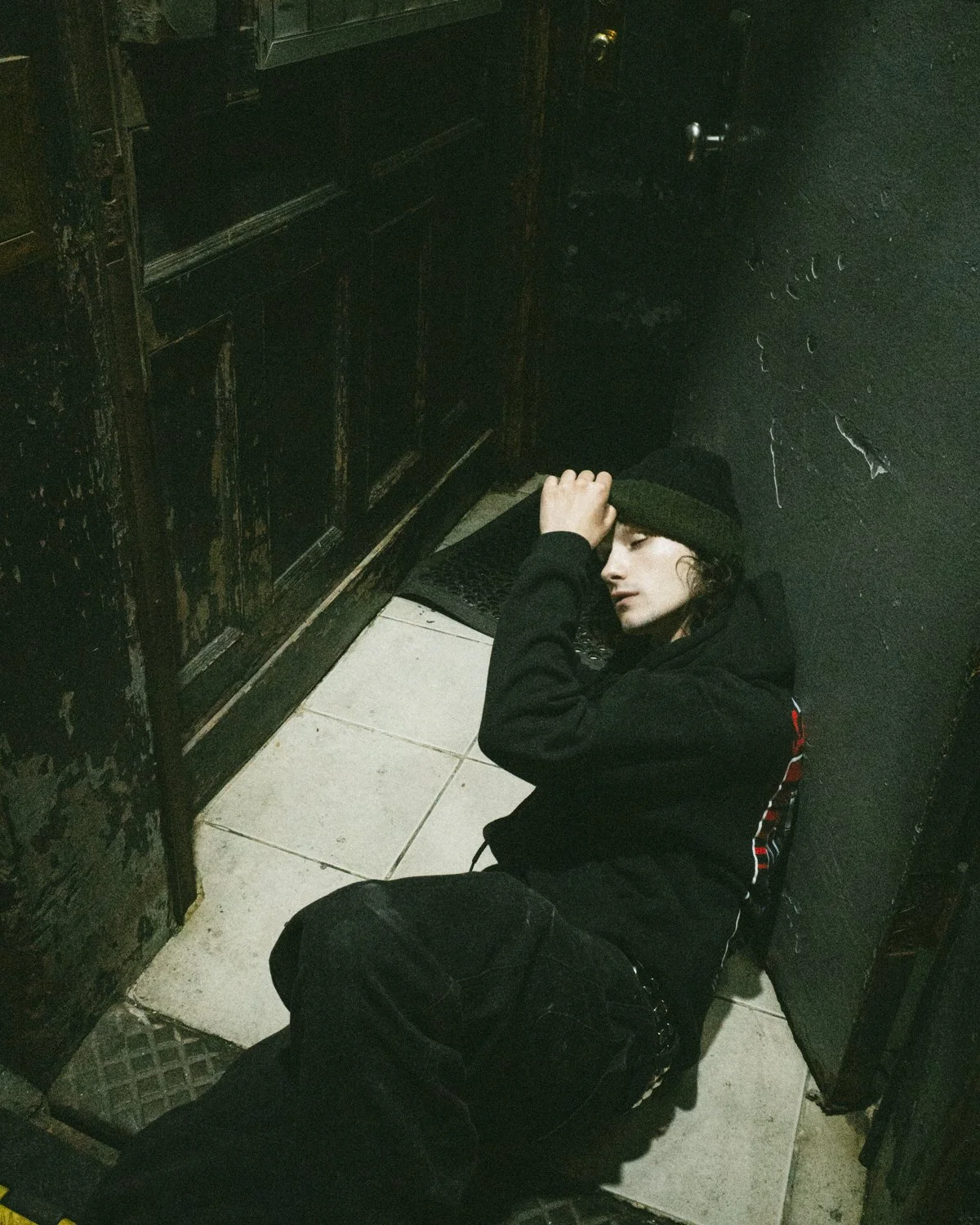
Revan wants to perform live more in the future, but that’s not the focus now.
“I've not really been as invested in that,” they said. “The way me and my manager feel right now is that we want to keep working and building the base that we have right now. We've put feelers out there because I do want to have an idea of where my fan base is located because that's a big part of it as well. Unfortunately for me, a lot of my fans are from Texas. I might have to perform in Texas at some point.”
Revan said fans of their music pop up in other unexpected locales.
“It's very interesting to find where some of your fans are located, because you'll definitely find that you'll have fans in places you never really expected,” they said. “I have a pretty decent following in the United States, and that's what I assumed. That's what I figured would happen since I'm based in the U.S. But then when you look further into it, you can see that you also have fans overseas. It's weird, like Italy, randomly I have a decent following there. When I started music, I never imagined someone in Italy or the UK would be finding my music, but they do. And it's just like, wow, that's cool.”
Revan is adding an instrument to their repertoire.
“I started playing guitar,” they said. “Unfortunately, because I still work full-time, I'm not at the point yet where I can quit my job. It is difficult. I don't have as much time to play as I would like. At the end of the day, I do still look at myself as a singer. I still think that's what I do best more than anything. So a lot of my time that I have still goes towards singing and writing and mixing and mastering and the production side of it. Eventually, the long-term goal is to be able to make music full-time. And when I am making music full-time, that's when I see myself getting more into instruments. I do want to be able to play guitar on stage while singing, because I think that's cool and just adds another layer to it. So I have a lot of work to do. I still got to get a lot better with guitar.”
Revan has worked with another artist.
“I haven't released anything with another artist, but I have worked with one,” they said. “I met an artist that lives up here. He lives in Amsterdam, which is about 40 minutes from here. He's a lot further along in the music process than I am because he has a record deal. He has a band, but he also does his own solo thing, and he does a lot of shows. He's always active. We recorded a song that we made from scratch together, which was a really cool process to go through.”
Revan prefers to work solo, but welcomes occasional collaborations.
“When it comes to collaborating, I'm very much a solo solo sort of person,” they said. “Especially when it comes to writing lyrics, just because I feel like my lyrics are quite personal to my story, I don't really like the idea of writing around other people. I also don't really like the idea of recording with other people. But at the same time, I'm a student of the game and I want to learn as much as I can. So anytime I have an opportunity to work with someone that clearly knows more than I do and it can genuinely teach me things, I take that opportunity. I have worked with a bunch of different producers. One was based in the UK. It's always cool to talk to different people about music. Whether they're musicians themselves or whether they're producers, it's always interesting to pick other people's brains and see what they think about things.”
Revan said such collaborations produce good results.
“I've had a lot of experiences with producers where I'll come to them with a song,” they said. “I'll be like, I want this song to sound like this or this is how I envision it sounding. How can we get there? And throughout the process, we just end up doing something completely different. It's not necessarily what I was originally thinking, but this is still great and I still love this. So a lot of it is the process, and those are things that you can never really account for until you just start doing it.”
Revan recalled the first musician to impact them as a youth.
“It's nowhere near the lane that I'm in, nowhere near similar to the music that I make,” they said. “But I would probably say Frank Sinatra, because I grew up in a very Italian household, so that was most of the music that was played for me and around me. The first song that impacted me in a musical sort of sense was Fly Me to the Moon by Frank Sinatra. After I heard that song, I went through my little Frank Sinatra phase where I was going through all of his music and listening to all the classics.”
Revan then was drawn to more contemporary music.
“As I got older, it was cool because I started to move away from the classical swing music,” they said. “I found so much more music that was very impactful for me. The next band that really impacted me was Nirvana, so obviously completely different. Once I stepped into that world, it snowballed where after Nirvana, I started to learn more about punk rock. I listened to Sonic Youth and Sex Pistols and all this classic punk rock, and The Misfits. That's where I started to really build myself as an artist. I really want to be influenced by this. I want to find ways to incorporate this into my music as well.”
Revan initially didn’t believe music was in their future.
“That took a while, really not up until a few years ago,” they said. “When I was growing up, I was very insecure about myself and about my voice and about a lot of different things. Growing up, I had never viewed myself as someone that was creatively inclined. I would be told here and there and now and then that I was creative, and I had never seen it in myself, so I would shrug it off. I always did enjoy writing from an early age, and especially when I went through school, writing and English class was one of the only classes that I was ever actually good at and enjoyed. I was not a math person or a history person. I loved reading and I loved poetry as well.”
Revan eventually shifted to creating music.
“I started writing songs in my freshman year of high school,” they said. “Around when I was 14, that's when I started writing songs. But at the time, I never imagined myself singing or doing anything with them, so I would just write them for fun. I would write poems every once in a while. And then a few years ago, I was in a point in my life where I had just finished doing an MMA phase where I was training to be a professional MMA fighter, and I did that for two years. What led me into that was my father had passed away and at the same time, I got kicked out of college.”
Revan explained what led to the expulsion.
“I was kicked out for selling weed on campus,” they said. “Definitely wasn’t my proudest moment being in the back of a cop car in handcuffs while in my pajamas during a snowstorm. But for a broke kid in college, selling weed was essential for drinking money and clout.”
Revan found something to direct their focus.
“I was at this crossroads in my life where I didn't know what I wanted to do,” they said. “I didn't really have much direction or much idea. I went headfirst into MMA because one of my friends was interested in doing it. It was not necessarily a waste of time, but it was definitely not the path that I was supposed to be on. It was definitely necessary for me to go through that though, because that's where I learned a lot about myself as a person and as an artist in some ways as well.”
Despite winning their first bout, Revan knew a change was needed.
“I didn't feel happy,” they said. “I didn't enjoy it anymore. I came to the conclusion that being a fighter is never really what I wanted to do. I've never taken time to really think about what I want to do and what I want to be. This is my life, so I should do what I want to do and be what I want to be. That's when I started to finally say I'm gonna just make music because that's what I've always wanted to do. It gets to that point where you feel like you almost have nothing to lose. Let's roll the dice on this and see where it goes. That's when I started to sing out loud. It was all very baby steps. I would sing out loud in my room and that would sound good for a little while, and then I'd be okay with that. Then I was like, let's see how other people feel about this. I would start posting 30-second clips of me singing here and there, and I would see what people would think about it. And it became one of those things that continued to snowball.”
Revan worked their way up to releasing a song.
“Finally, I felt confident enough to record a song,” they said. “This was almost three years ago. That's when I was finally in a point where I felt confident enough and believed in myself enough. The more I wrote songs at that time, the easier it became. The more I released songs, the more positive things I was hearing. So I just started to continue and continue.”
Revan wants to be successful without making money the motivation.
“A big part of me loves the attention,” they said. “But even more so than the attention, I love the community aspect of it. I like to think of the people that listen to my music as a community. When I see them interacting with each other or talking about the music, that's one of the most rewarding things for me. When I first got into it, I would think often about how big I'll get or how far I'll get. But nowadays, I don't really think so. I look at it as something that I love doing and I want to do full-time. My goal is to do everything in my power that I can to be at the point where I can do it full-time. I definitely don't want it to be at a point where I'm ever being greedy. I don't like the idea of selling out stadiums and charging people $500 a ticket or something like that. I don't like the idea of commercializing music. I've always wanted my shows to be affordable.”
Revan doesn’t want to lose his authenticity as an artist.
“I don't want it to be something that someone has to make a decision between buying groceries that week or buying a ticket to my show,” they said. “I wouldn't feel good about that. I look at myself as more of an entity for creation. I hate the idea of making music just to make it or when bands become a parody of themselves. It gets to a point where you can say everything you want to say, and then really what else is there to say at that point?”
Revan pursues other creative outlets.
“I have a lot of other interests as well,” they said. “I was actually in an indie film in Brooklyn two summers ago now. That was a really cool process. I had never done any sort of acting before then, and I really did enjoy that. So I can definitely see myself transferring into that at some point or transitioning into that. I really like fashion as well, so I can see myself doing something with that.”
Revan was always drawn to music.
“It was the thing that spoke to me the most,” they said. “I also had an intro to it because I had such an interest in writing. It translated very well. I always liked the idea of painting or drawing, but I was never good at it. Making music now is a feeling that I can't describe. I don't get it from anything else. I've had movies or TV shows that speak to me and hit me in an emotional or a specific sort of way, but I've never had a movie or a TV show hit me in a way that a song has.”
Revan said music is way to express themselves better than simply talking.
“It's easier to explain myself through song,” they said. “I've had that with previous relationships and just talking to people. Sometimes when I literally can't really put it into words, I'll send them a song, and I'm like, this song is what I'm feeling right now or this song explains it much better than I can. I do speak through music in that way.”
Revan doesn’t let being a musician dictate their appearance.
“I just do whatever when it comes to customizing my look,” they said. “If my budget allows, I like to switch it up every once in a while, but I plan on having a lot more tattoos/piercings eventually. The location of them doesn’t matter too much to me in relation to music.”
Revan isn’t shy about being nonconforming to traditional gender identity norms.
“When you start to limit certain things about your life and about who you want to be, in a lot of ways, your life becomes not your own,” they said. “You start living to impress other people, or you start living by other people's standard and by other people's ideal version of who you're supposed to be. I was guilty of that for a very long time growing up. I was very much so attentive to what other people thought about me or what other people felt about me, and I wasn't one to really rock the boat. It wasn't really until recently before I started making music, that I started to realize that that's not a good way to live your life. You should want to do the things you want to do. You should want to say the things you want to say. Some people aren't going to like you for it, and that's all right because there's going to be people that do like you for it.”
Revan said it’s important for people to find out where they belong.
“For most of my life really, I was always in the wrong spaces and around the wrong people,” they said. “I would often think about why I couldn't fit in or why it was different for me. I would look at some of my friends and I'd be like, wow, it's just so easy for them. Why isn't it like that for me? Why do things have to be harder for me? I realized in a lot of ways I was doing it to myself because I was trying to force myself to be in these spaces that were just never for me. You realize that all those labels are thrown at you because people are projecting. A lot of people, especially insecure people, they don't like the idea of someone being free in their own skin and confident in their own skin because they aren't confident in their own skin.”
Revan balances the need to write music with times of inspiration.
“There are some times where I feel the spark will come and go,” they said. “When I can say something in a song that really expresses how I feel deep down and really gets something out that I've been needing to get out desperately, it's such a rewarding, euphoric feeling almost. So when it's not there, it's difficult. You can tell very early into that process that clearly it's just not here. When it's not here, I drop it and I do something else. But what makes it difficult is because I'm not in the position to do it full-time. When I have free time and I'm not working on music, I feel like I'm lazy. It becomes this constant battle where there's that nagging voice in my head that's telling me you're being lazy, someone else is working right now, you're not working, get off your ass, do it. But then I do it and what am I doing? I'm writing a song just for the sake of writing a song. I'm not writing a song because it's genuine.”
Revan said it’s vital for their music to resonate.
“There has to be some sort of meaning to it,” they said. “The meaning doesn't have to be universal. It doesn't have to be this grand stated thing where it's this is what the song is about and that's it. But it has to have some sort of meaning. Each song has to have some sort of meaning to me. And if no one else has that meaning, that's fine. They're supposed to have their own interpretation of it. But I have to have some sort of meaning of it, otherwise there's no point in doing it.”
Revan dispensed advice to aspiring musicians.
“Above all, have a set idea of what you want to do and what you want to create with your art,” they said. “If you want to just do it for fun, that's completely fine. If you want to do it for a career, have a genuine sense of what you want to create with your music and what you want to do with your music. And just stick to it. The biggest and the hardest thing when it comes to music — and it's not only music, it's a lot of things in life, but certainly when it comes to music — it's just consistency. It's doing the boring stuff over and over again. Continue to do it, continue to say the things that you want to say, continue to be yourself in the most authentic way that you can.”
Revan advised musicians to not employ AI.
“Some musicians use AI for lyric writing, vocal elements,” they said. “Sometimes it’s used to create instrumentals/background instruments. Sometimes used to create entire songs. It’s also used in promotion/marketing. I believe AI used in any element of creation is contradictory. I don’t think AI creations can be considered art and I believe it holds no place in the music/creative or artistic worlds.”
Revan said musicians shouldn’t give up.
“You will have days where you don't feel as strongly or as confidently as you do other days,” they said. “When those days come along, just roll with the punches, keep going. Remember what drew you to music to begin with. Remember what made you so passionate about music to begin with and continue to do that. Probably the most important thing is don't think about the result. Don't care about the result. Don't care about whether people like it or people don't like it. Don't care about how many people listen to it or how many people don't listen to it. Just do it. Just do it because you want to do it.”
Revan’s Instagram: https://www.instagram.com/findrevan/
Revan’s YouTube channel: https://www.youtube.com/@findrevan