

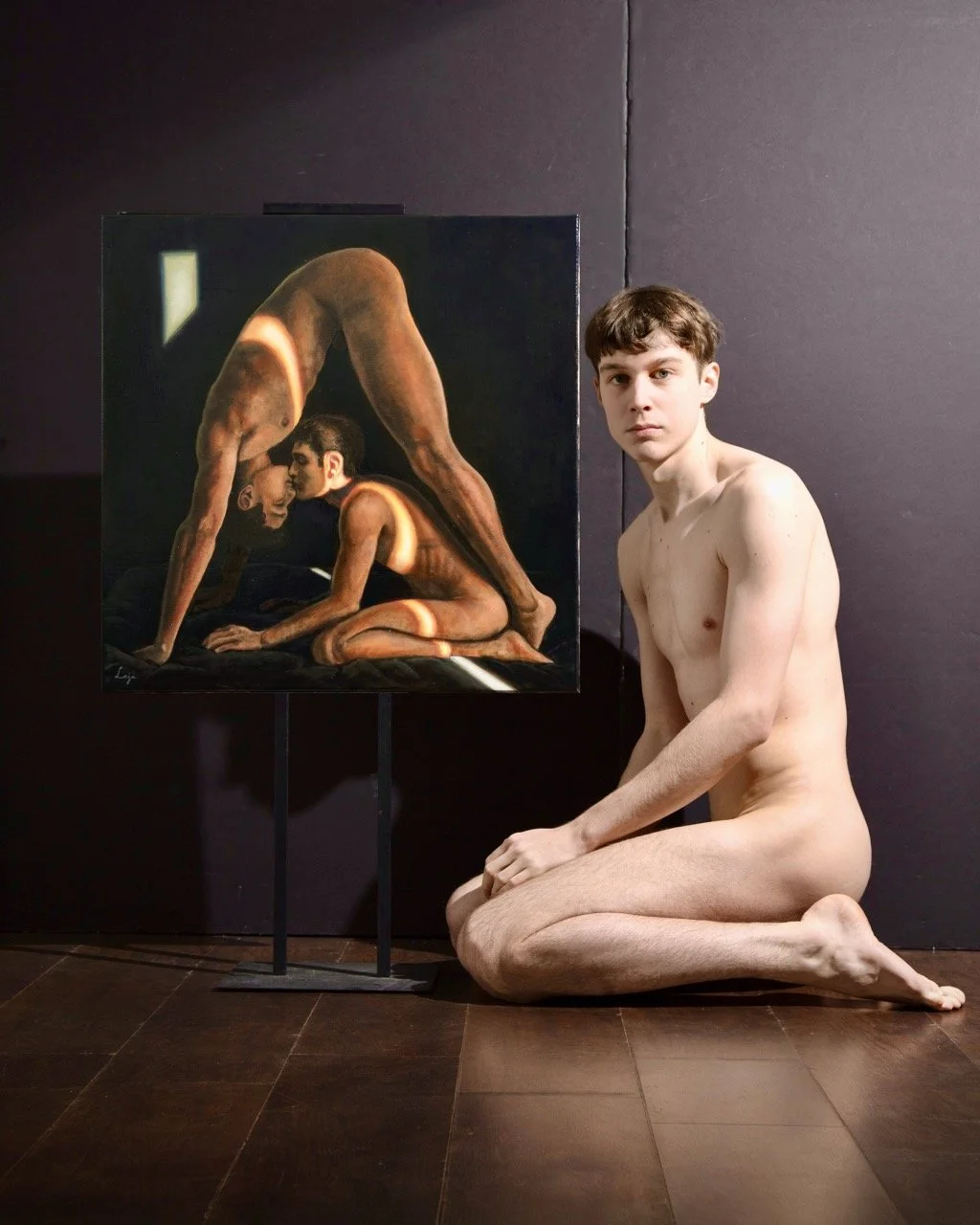
Artist Lukasz Leja poses with his piece Ludlow st. Photos submitted
The artwork shown in the story includes explicit images.
By Tom Victoria
Lukasz Leja creates art with buildings and canvas. The architectural designer is also a painter.
The artist, who also uses himself as the subject for photographs, uses figurative painting in oil to depict the subjects of sex and love.
Lukasz, 30, a Polish native residing in New York City, explained why those topics inspire his creative urges.
"I was drawn to sex and love because I felt they were among the subjects taken least seriously and given the least attention in art," he said. "I’ve seen hundreds of paintings depicting portraits, people eating at a table, sitting on the grass, working, flowers, animals, every aspect of everyday life. But I haven’t seen nearly as many paintings depicting pleasure. And when I did, it often wasn’t on the main museum walls. It was treated as something obscure, vulgar or somehow lesser. I felt that this part of the human experience deserves to be elevated and appreciated more. Pleasure, intimacy, desire and the human body are such fundamental parts of being alive, yet they’re still surrounded by so much stigma and shame. Hopefully, with time, some of those stigmas will disappear, and we’ll be able to celebrate the beauty of the human body, intimacy and pleasure. That’s my little form of activism."
Lukasz savors intricate pieces.
"The paintings I’m most proud of are usually the ones that are compositionally complex," he said. "I like when every small detail has been considered, designed and thought through so that even something that might initially seem simple has a purpose within the larger image. Two of my favorite paintings are Velázquez, Move Over and Ecstasy of St. Luke. Velázquez, Move Over is built around a mirror. In the foreground, we see the back of a nude figure, while in the background reflected in the mirror, the artist is depicted painting his muse. I was interested in the relationship between the artist, the subject and the act of looking and also with the history of painting itself. Ecstasy of St. Luke is a more playful composition, made up of seven intertwined bodies that together form a skull-like shape. The painting was inspired in part by Salvador Dalí and his fascination with skulls and the ways the human body can be transformed into something surreal."
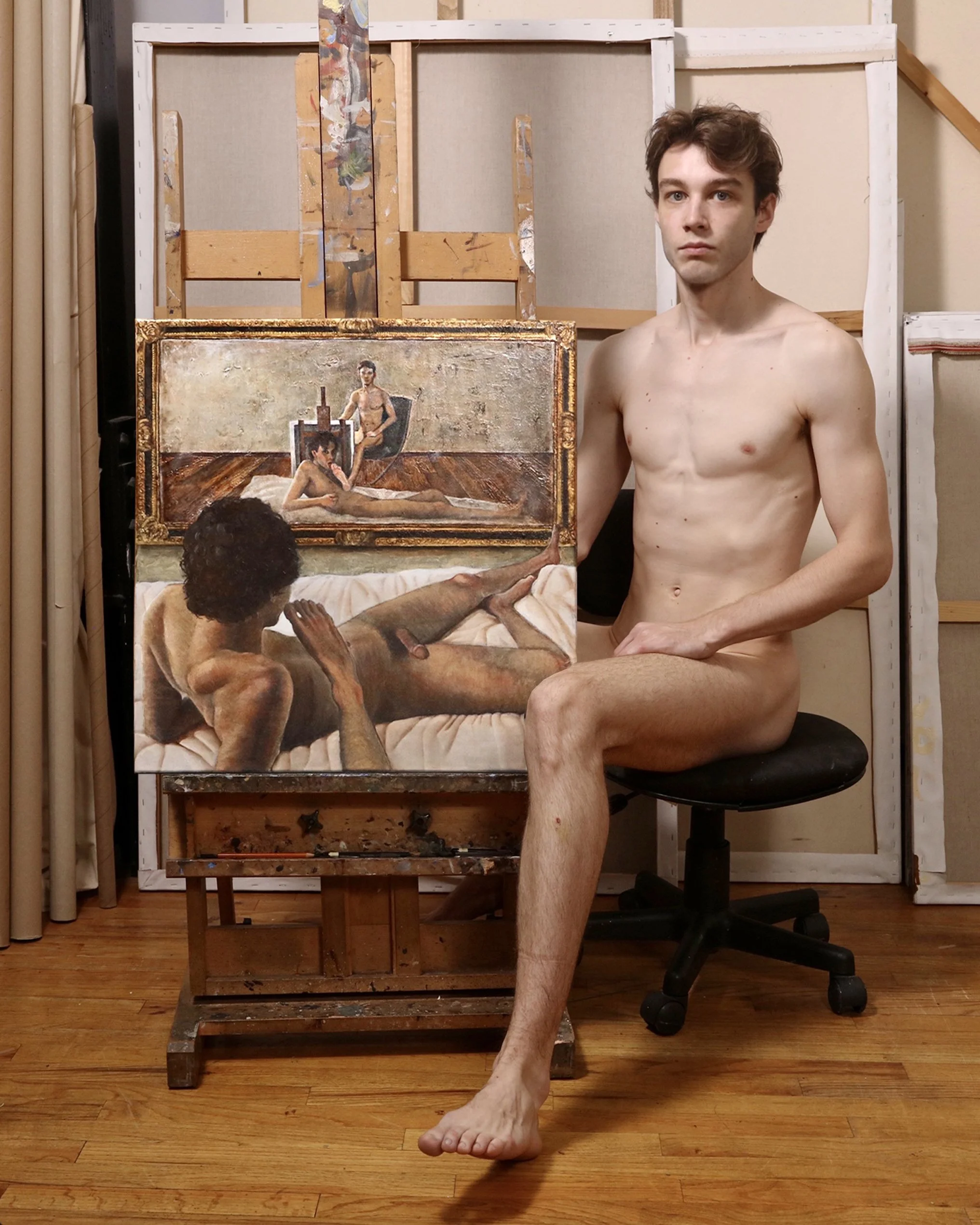
Lukasz shows Velasquez, Move Over.
Lukasz explained his creative process.
"I've been gathering themes and ideas and color palettes and inspiration for years," he said. "At this point, I have sketchbooks filled with compositions. I'm slowly adding to it and going through them and looking at what I've been thinking about years ago. If it's still with me and if still interesting to me, I bring it back. There's only so many paintings I can do. I work in oil, and I'm not fast because I like to paint in a realistic style and take my time. It's a very slow process and it's not very spontaneous. It's structured and carefully planned. Compositions are worked out in advance, and I spend a lot of time figuring them out. There are themes that are in my sketchbooks that I still haven't explored."
Lukasz is content that people derive their own interpretations of his art.
"I'm happy with people having their own interpretations," he said. "When I first started painting, those were paintings that were just for me, just for my apartment, about people in my life and often more intimate themes. So I never really wanted to share it on a bigger scale. But once I started, I loved people were able to relate to things that were so personal to me. People had their own thoughts about it and ways they related to it. I thought that was beautiful, and it made me feel excited about showing my work. But I love when people walk into a gallery and smile or tell me stories from their own lives that remind them of what they're seeing."
Lukasz is inspired by his life and fiction.
"It's a lot of my own personal experience, but it's also exploration and fantasy," he said. "Not everything I paint I've experienced myself, but it's part of queer culture, queer history and themes I borrow and pay tribute in my own way. Recently, I've been working on a large painting inspired by the Chelsea and West Village piers and the graffiti from old photographs from the '80s and before. I'm inspired by what came before me and by the creators that paved the way for me. I would say 70 percent of my work is from my personal life and the rest is exploration or fantasy or something that I can't explain."
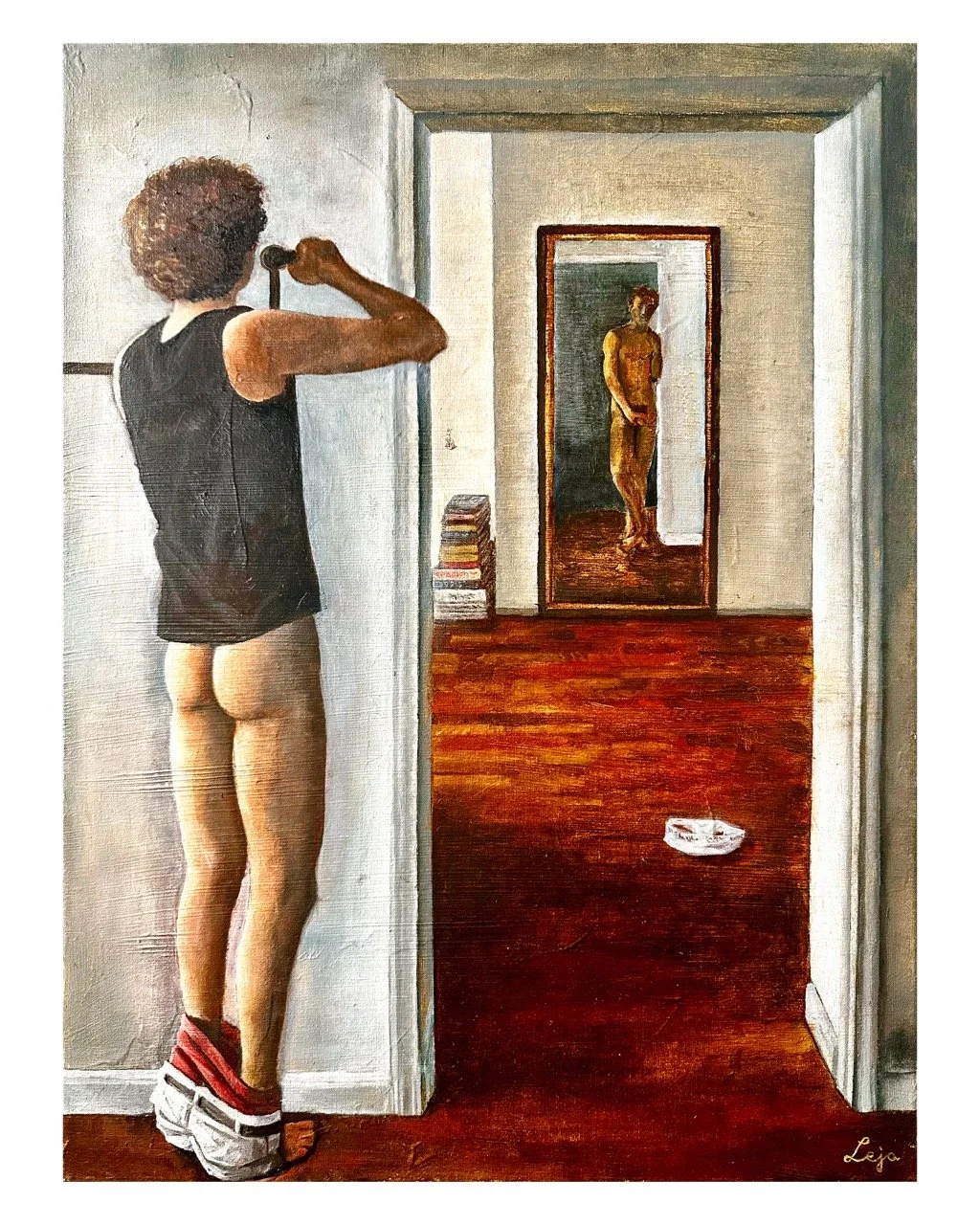
Lukasz’s Moving in.
Lukasz explained the significance of those areas of the city.
"I’ve been researching New York, particularly gay New York and the history of meeting, cruising and finding one another in the city," he said. "Looking through photographs and archival material from that era, I was really inspired by the way people communicated before the digital age. They would leave messages and funny notes on walls, write phone numbers, describe who they were looking for and draw little doodles. Those small traces of everyday life really humanized the period for me. They revealed the humor, personality, desire and playfulness of people and places that were often viewed from the outside as obscure or taboo. I’m interested not only in the history and struggle but also in the humor, intimacy and humanity that existed within it."
Lukasz finds painting as the way to express himself better than speaking about it.
"I'm a visual person, so everything is easier for me to express visually on paper, on the canvas, even through writing," he said.
Lukasz currently paints bolder images than some would-be critics favor.
"I don't paint flowers, sunsets, landscapes or animals right now, but I could see myself exploring those subjects someday as part of my practice,” he said. “At the moment, they're just less interesting to me. I'm sure my work will continue to evolve and that there will be many different chapters to it. That's what I'm hoping for. I would love to explore as many subjects and themes as I possibly can. I'm excited also to see my own point of view change and my own ideas on art over time."
Lukasz traveled to Amsterdam in July and August for the art shows Fecund Ground and Icons of Desire.
"I was lucky enough to be included in two group shows for WorldPride," he said. "The first show Fecund Ground featured seven of my more romantic and poetic paintings, while Icons of Desire presented my more explicit work. I really enjoyed having that contrast between the two exhibitions and being able to show these different sides of my practice. Both opportunities came thanks to the Tom of Finland Foundation, and I’m incredibly grateful for that.
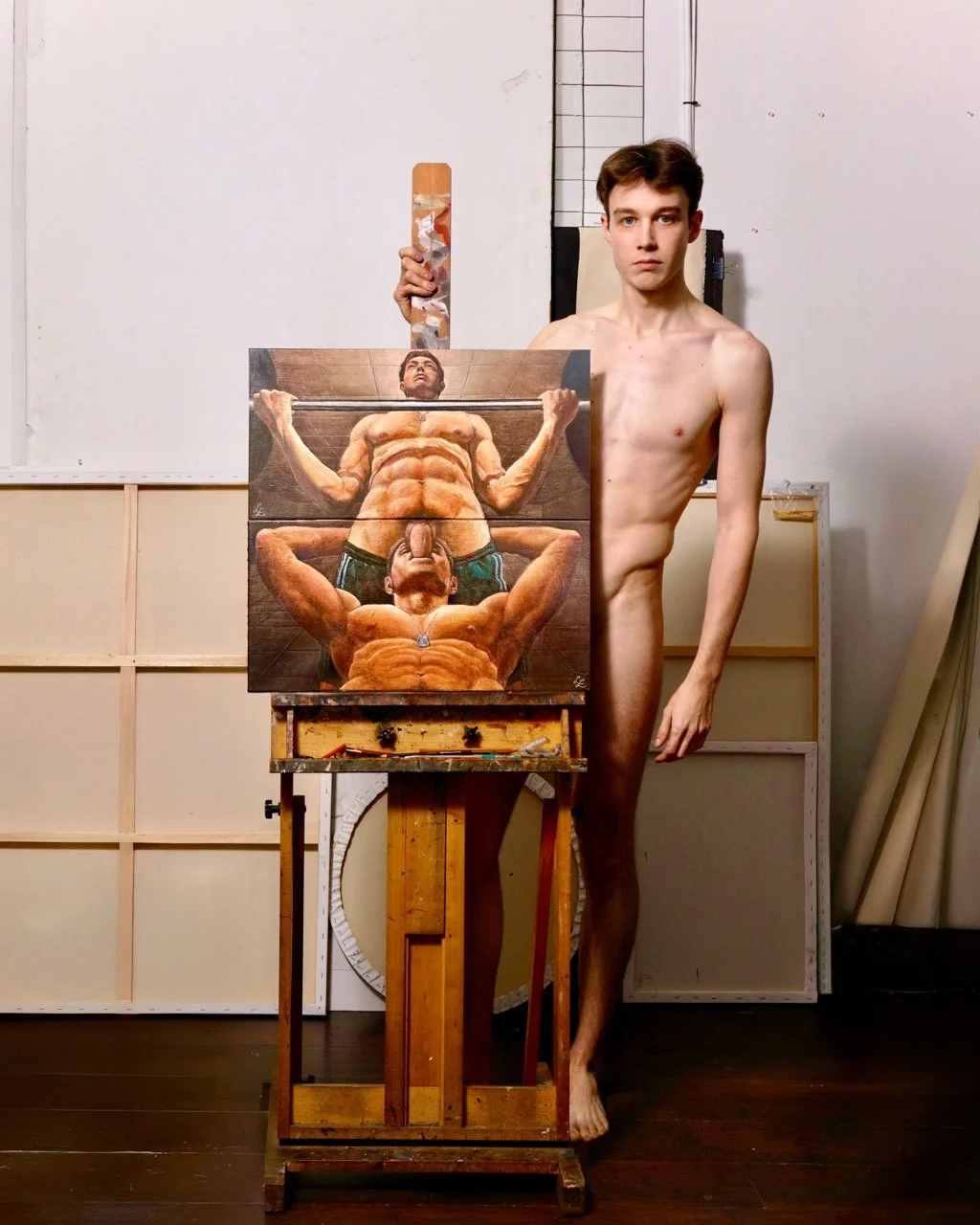
Lukasz displays gym bros: d*ckptych.
Lukasz won the Los Angeles Tom of Finland Foundation Emerging Artist Competition in 2022.
"The artwork that won me the 2022 competition was Velázquez, Move Over," he said. "It’s one of the paintings I’m still most proud of both because of its composition and because of the memories behind it."
Lukasz often poses in photo recreations of his paintings.
"It happened very naturally," he said. "You finish a painting, you want to freeze that moment in time and celebrate and photograph yourself with it. I thought taking it a step further and copying the pose from the painting and recreating what I had just spent weeks portraying would give it an additional layer or depth. I never really thought of it as an art form. To me, they're an additional part to the paintings. The first one was taken four or five years ago. I like having those pictures. They take me back to where I was at the time. When you see yourself, you can often tell what year it was, what moment you were in and what you were thinking or feeling."
Although Lukasz presents a striking image, he's not pursuing modeling.
"I love collaborating with people," he said. "It's always fun, but it's even more fun when we're on the same page creatively. I feel much more connected to the work when I'm creating and collaborating and we both come up with ideas and create something together. I like that type of environment."
Lukasz always enjoyed art as a youth.
"I always liked art ever since I was a little kid," he said. "I always had art books. I started studying art history at an early age, going chronologically starting with ancient art. I remember being obsessed with Egyptian art, ancient Rome and ancient Greek art. A lot of those have homoerotic representations. I remember being shocked as a kid and thinking, wait, so this is normal? This is depicted in an art book and it's not a crazy, weird, terrible thing. I was really inspired by the idea of portraying everyday life without prudery, representing people openly and incorporating fantasy and mythology and a sense of something greater than life. I'm drawn to that combination of realism and fantasy and to the idea of being open about the body and about your experiences."
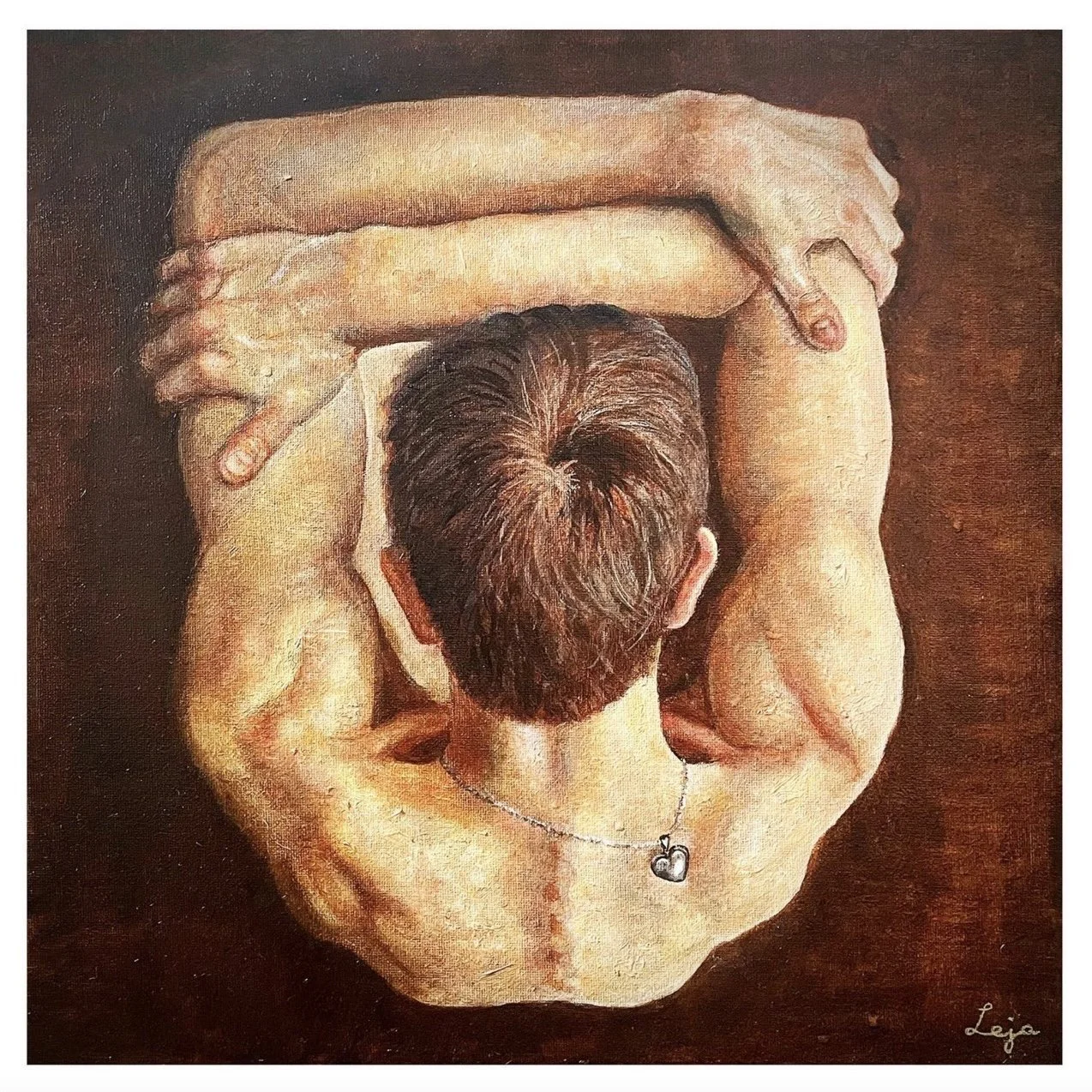
Lukasz’ ,-(.
Lukasz then discovered more modern works.
"But later, I started discovering more contemporary artists and those really spoke to me," he said. "I just remember Googling and trying to find queer artists and some people to relate to. I found figures like David Hockney and that's how I started to learning more about what's happening in contemporary art."
Lukasz pointed out modern society can learn much through art, including appreciating people's differences.
"It's crazy to me," he said. "When you look back at ancient times and see the openness in some of the artworks from thousands of years ago, you think, wow, where did we go wrong as a society? It feels like there was a strong shift in the way we appreciate one other, our experiences and our bodies. I'm not a historian so I don't know what caused it. But there's a lot of undoing to do."
Lukasz pursued architectural design as a practical career to utilize his creativity.
"I wanted to do art," he said. "My parents weren't very happy. It's not a very stable life. You don't hear of many stories of artists doing very well. It's usually the opposite. You hear of artists who are struggling, and there's this 1 percent of artists that get really successful and can make a living and do what they love. But the reality for most of the artists is not as bright. Even when artists are able to make a living in the arts, it's not always through their own art, which was always a goal for me. I wanted to be able to support myself through my own art. I love architecture. I'm so inspired by it. It came naturally to me. It combines technology and creativity, and you can make a living from it. It's more stable, and there are so many practices and offices doing amazing work. I still love architecture very much. I just wish the architectural and building world were different. It's very expensive to build now, and even buying property is incredibly expensive. I wish that were different because I would love to design and build my own projects. But, of course, I cannot do it on my own."
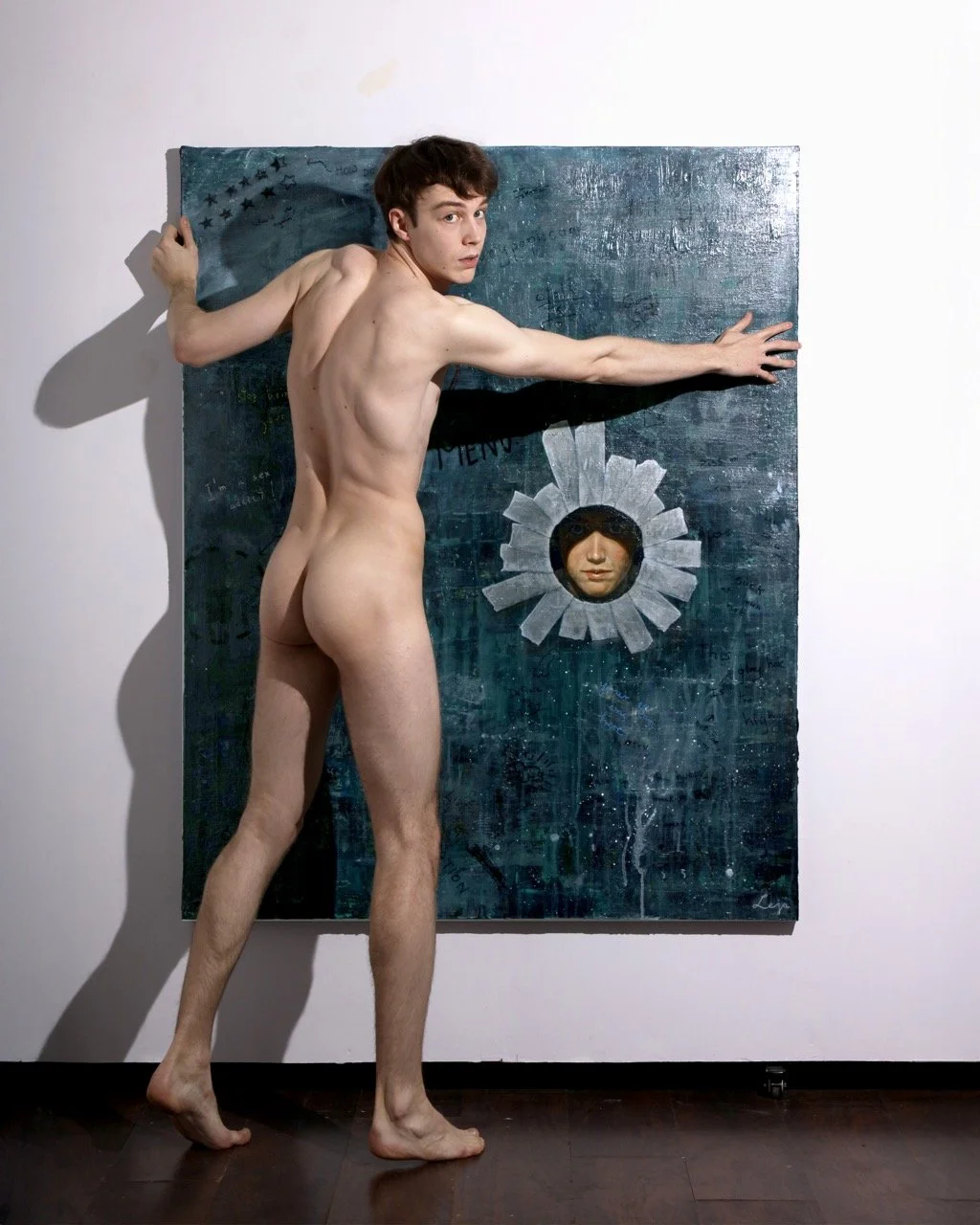
Lukasz stands by glory h confessions.
Lukasz hasn't been involved in architecture for two years.
"I really want to find a way to go back to it," he said. "I would love to take on a project that's really meaningful to me. I would love to build a house someday even if it's something on a smaller scale. It would be a very fulfilling project to me. After high school, I went to study architecture and earned my bachelor's degree. It was a great time, and I was still very young. When you're 18 and you start studying, you still don't really know yourself."
Lukasz said there are factors playing into some architecture being drab and unimaginative compared to older buildings.
"There's architecture and there's buildings," he said. "Usually, it comes down to price. I've worked for architecture offices, and architects will often come up with really cool designs, but then the feedback comes: we cannot afford it. We have to cut it down. We have to simplify it. We have to modularize it."
During Lukasz' education, he traveled the world.
"I studied in England, which was really great," he said. "It's where I learned English, moved to a different country and started a new life. I also went to China for a student exchange, which was great. I traveled a lot when I was living there in England. Traveling was so important to me back then. I miss it."
Lukasz eventually landed in The Big Apple.
"It wasn't the plan," he said. "It kind of happened that way. I got an internship after I finished my studies, and I came here. It was the first time I'd ever been to New York. I came here to work and do an internship, but I ended up liking it so much. I made friends very quickly, kept extending my stay, and I never moved out."
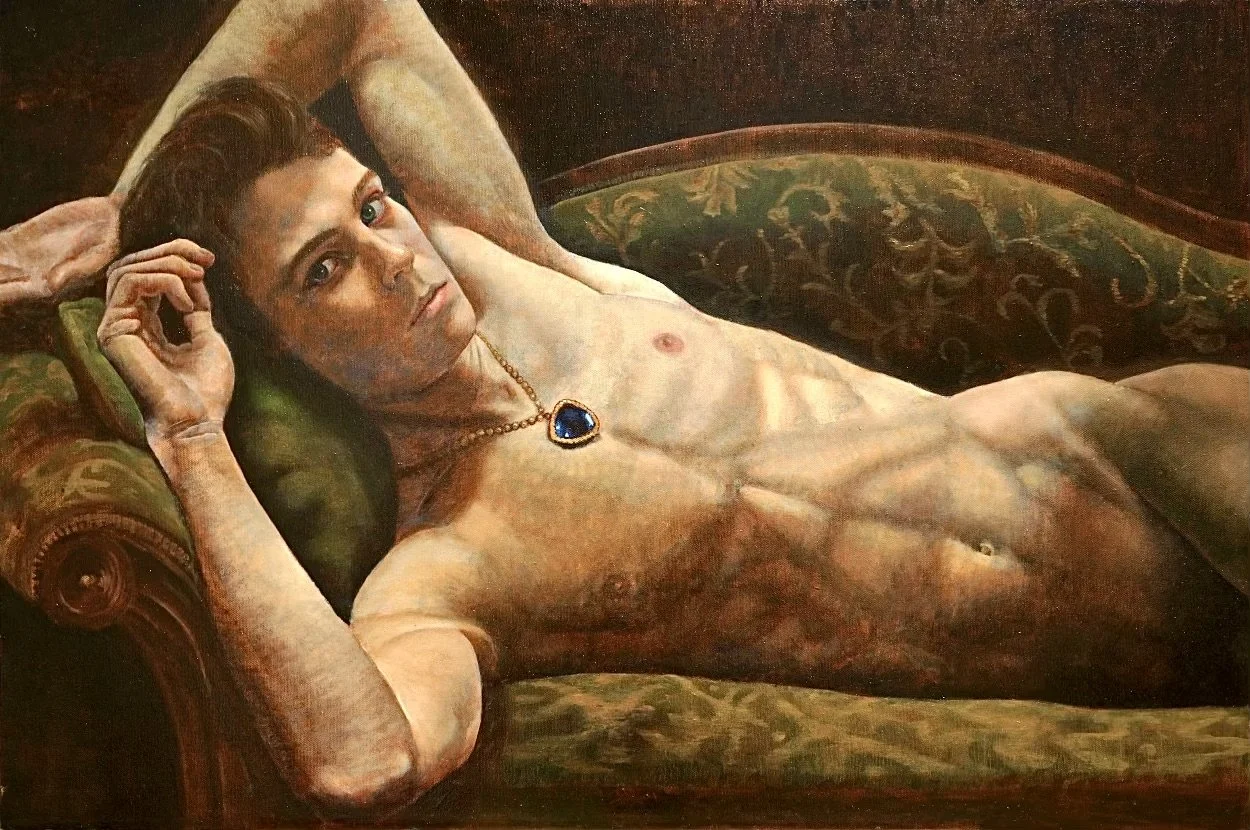
Lukasz’ Paint Me Like One of Your Polish Hoes.
Lukasz worked on design projects for such luminaries as the crown prince of Saudi Arabia and Lady Gaga.
"It was through the architectural firms," he said. "I was just an employee. But it was incredible working in New York. A lot of firms get really amazing clients and take on amazing projects, and it was exciting to be part of them. I was still very young, but those projects were a huge inspiration to me. I have such great memories from that time."
Lukasz left his native country at an early age.
"I lived in Poland till I was 18, so I never really lived there as an adult," he said. "I went to boarding school, so I had a very sheltered experience of just living there as a child and a teenager. I never exhibited in Poland. I would love to exhibit there. The closest I've come to exhibiting in Poland was Berlin. A few friends from Poland came to see the show, which was very meaningful to me. I would love to do the same in Warsaw and Krakow. That would be a very special moment."
Lukasz stressed the vital role art plays in representing everyone, including the LGBTQ+ community.
"It's so important," he said. "I remember how important it was for me growing up and discovering artwork like that. It doesn't have to be explicit. Sometimes it can be as simple as two people lying in bed, holding hands or hugging. Those kinds of representations are so important for young queer people, but also for adults who didn't get to experience them growing up. It's something beautiful to see, celebrate and relate to. It doesn't have to be for everyone."
Lukasz said creativity abounds in the LGBTQ+ community.
"Definitely," he said. "You have to be in touch with yourself, listen to your thoughts and spend time looking inward. You have to answer a lot of questions about yourself. That's when the best work gets made, when you're completely honest with yourself."
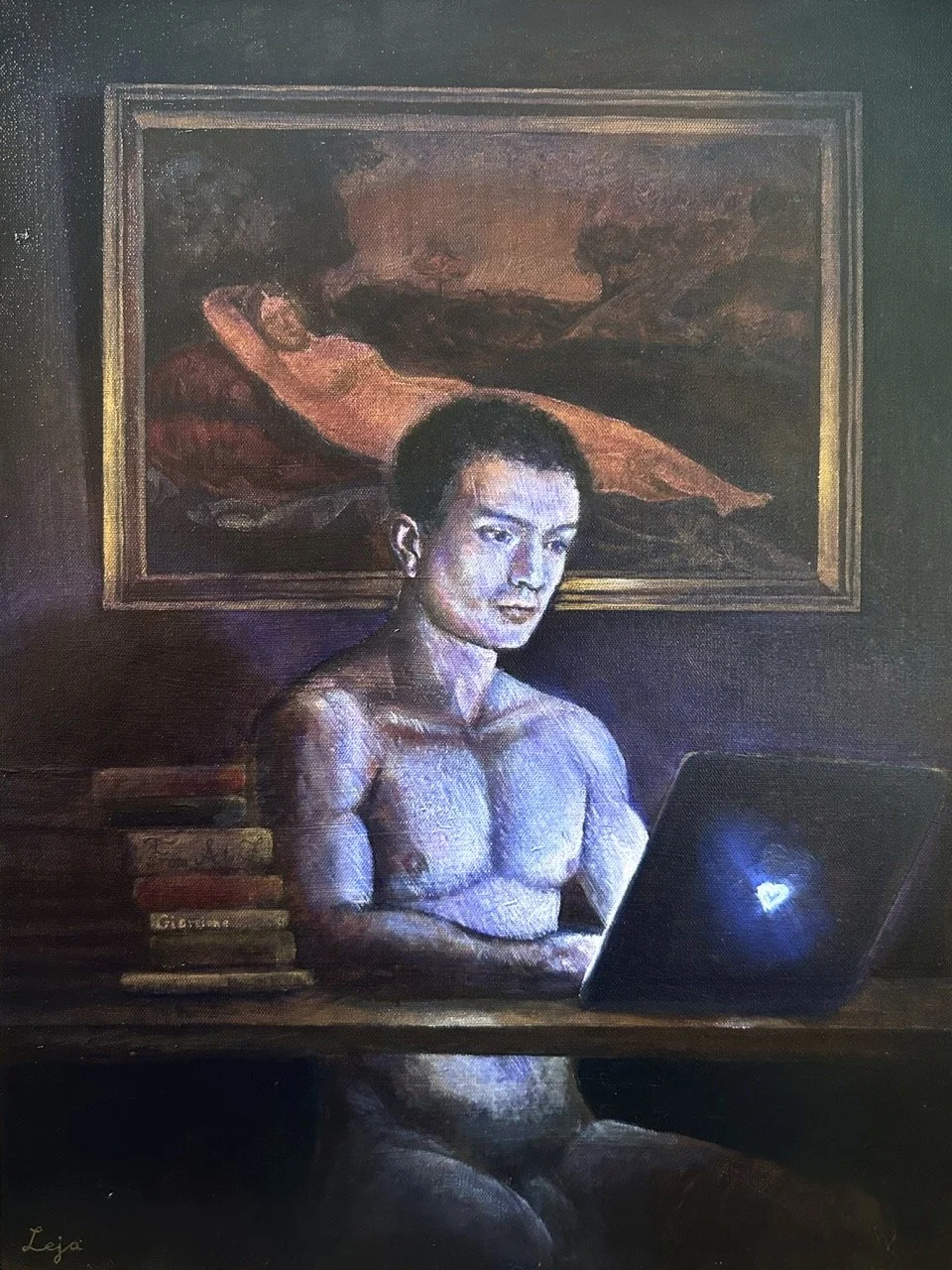
Lukasz’ Saturn Awakened.
Lukasz stays motivated to make art.
"Honestly, it's easy," he said. "I've always been pretty disciplined and my work is slow. If I don't do it, I'm really not going to finish it. You get to schedule your time and think today I'll finish this part, tomorrow I'll finish this part, and it becomes very organic. I wouldn't be able to live in a rush with a lot of adrenaline. My life as an artist is rooted in making time for art, for love and for all the beautiful things in the world that don't necessarily create any industrial value but are so much more important on a human level. I have deadlines and art shows I commit to, and I work pretty hard. A lot of people think art is spontaneous. You have an idea, sit down at the easel and make it overnight. But it's much more scheduled than people realize, and there's a lot of discipline involved."
Lukasz dispensed advice to those considering a career in architectural design.
"I would probably warn them about a few things," he said. "It's a very fulfilling, beautiful industry. It's also a very high-paced type of work. When I worked in architecture, I only had time for architecture. It was very hard for me to balance art and architecture because I was working from 9 a.m. until 7 p.m. every day in New York City. You really have to love it. It has to be your life. If architecture is your life and everything you've ever wanted to do, then go for it. You're going to be very happy because it's a great profession. I loved architecture so much. The only reason I had to stop doing it was because my art career started to grow, and I realized it was so much closer to my heart."
Lukasz said artists can't be afraid to express themselves.
"For any artist, I would say just go for it and always express yourself even if you have another full-time job," he said. "Art is such a beautiful thing that everyone should do it. It's like therapy, honestly. You get to think about the best and the worst parts of your life, unpack them and sit with them, learn from them and create something beautiful out of them. If you want to make a living off of it, I would say don't focus too much on that. If you focus on it too much, it stops being your art. You start wanting to please people and thinking too much about what will sell instead of doing what you actually should be doing. That's what I tell myself because there are things I want to make and sometimes I'm like, is it too risky? Is it too much? But then I remember that's not what matters. Just do it."
Lukasz’s Instagram: https://www.instagram.com/lukaszleja/
Lukasz’s website: https://www.lukaszleja.com/shop
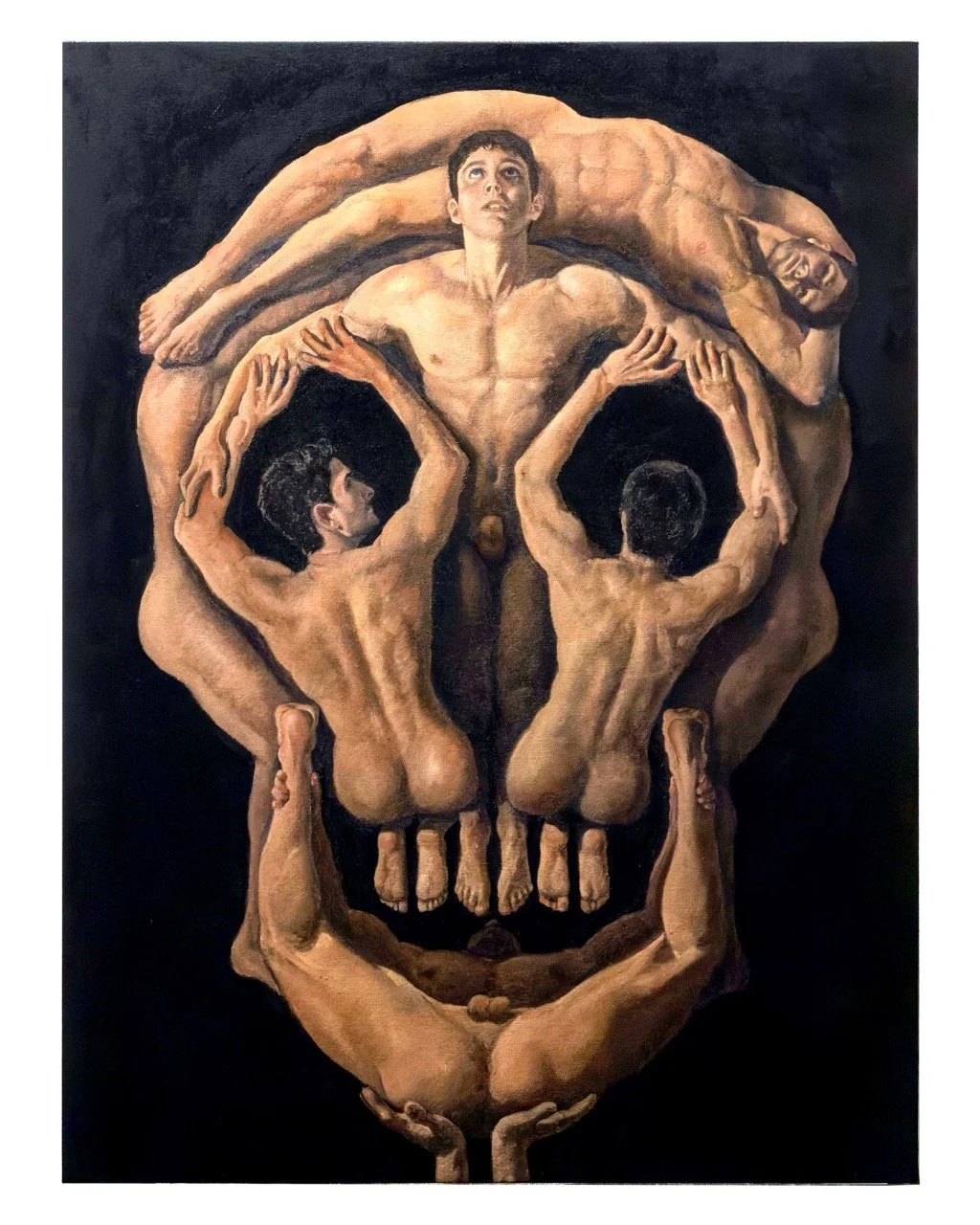
Ecstacy of St Luke.